Listen to this reflection
A few years ago, I received one of those indoor countertop gardens with which you can grow herbs and things. The very first herbs I tried to grow were, well, pretty sparse. Imagine, then, if I were a scribe or a Pharisee and spending so much of my effort figuring out the exact tithe on my pitiful little harvest. Ten measly sprigs of dill? The Lord gets one! Duty fulfilled!
That kind of drives home the point that Jesus is making when He calls the scribes and Pharisees hypocrites. The outward show of paying their tithes isn’t really for God at all. Jesus doesn’t say those tithes are bad, it’s the neglecting of the “weightier things of the law” — what we might call the heart of the matter.
Where is their right judgment? Their mercy? Their fidelity?
Judgment. Are we choosing correctly between right and wrong out of our love of and for God? Or are we choosing to look good in front of others? Or are we choosing what’s right at all? It’s important to remember that God does not need us. We add nothing to Him. It’s even more important to remember that although He does not need us, He wants us. God, who is Love, wants to shower that love upon us. We just have to choose to love Him and follow His glorious ways of love.
Mercy. Call it charity, call it love, call it concern for the other. All of those are exactly what God has for us. He asks that we be just like Him, loving and caring for others through the gift of our love, our very self, just as God so loved us that He gave His only Son to save us, and that Son, Jesus, gave His all to bring us into union with God. That kind of love is obviously far weightier than any herb or spice.
Fidelity. Jesus is reminding those hypocrites of the Gospel, and us, that faithfulness to God isn’t an act. It’s not a show. It’s a complete and total way of life. He tells us elsewhere in the Gospel that an amount of faith as small as a mustard seed is enough to move mountains. Yes, great and mighty things await us when we have faith. And how do we know we have faith? Because fidelity goes hand-in-hand with judgment and mercy, having faith means we choose the right and we care for the other, and we love God above all things.
To complete His teaching in today’s Gospel, Jesus warns us to make sure our insides — our hearts, minds, souls — are not filled with plunder and self-indulgence. Emptying ourselves of all that is evil and harmful, cleansing our interior, opens us up to all that is good and holy. The Sacrament of Reconciliation gives us this opportunity so we can focus on those “weightier things of the law” that give glory to God.
Hace unos años, recibí uno de esos jardines de mesa para adentro de la casa, con los que se pueden cultivar hierbas y otras plantas. Las primeras hierbas que intenté cultivar resultaron ser, bueno, bastante escasas. Imaginen, entonces, si yo fuera un escriba o un fariseo y dedicara gran parte de mi esfuerzo a calcular el diezmo exacto sobre mi insignificante y pequeña cosecha. ¿Diez ramitas chiquitas de eneldo? ¡Una es para el Señor! ¡Deber cumplido!
Eso ilustra muy bien el punto que Jesús está planteando cuando llama hipócritas a los escribas y fariseos. La ostentación externa de pagar sus diezmos realmente no es para Dios en absoluto. Jesús no dice que esos diezmos sean malos; lo que critica es el descuido de “lo más importante de la ley”: lo que podríamos llamar el corazón del asunto.
¿Dónde está su justicia? ¿Su misericordia? ¿Su fidelidad?
Justicia. ¿Estamos eligiendo correctamente entre lo bueno y lo malo por amor a Dios y para Dios? ¿O estamos eligiendo quedar bien ante los demás? ¿O acaso estamos eligiendo siquiera lo que es correcto? Es importante recordar que Dios no nos necesita. Nosotros no le añadimos nada a Él. Es aún más importante recordar que, aunque no nos necesita, nos desea. Dios, que es Amor, desea derramar ese amor sobre nosotros. Solo tenemos que elegir amarlo y seguir sus gloriosos caminos de amor.
Misericordia. Llámela caridad, llámela amor, llámela preocupación por el prójimo. Todas esas cosas son exactamente lo que Dios siente por nosotros. Él nos pide que seamos tal como Él: amando y cuidando a los demás mediante el don de nuestro amor, de nuestro propio ser; tal como Dios nos amó tanto que entregó a su único Hijo para salvarnos, y ese Hijo —Jesús— lo dio todo para unirnos a Dios. Ese tipo de amor es, evidentemente, de mucho mayor importancia que cualquier hierba o especia.
Fidelidad. Jesús les recuerda a esos hipócritas del Evangelio —y a nosotros— que la fidelidad a Dios no es una actuación. No es un espectáculo. Es una forma de vida completa y total. En otra parte del Evangelio nos dice que una cantidad de fe tan pequeña como una semilla de mostaza basta para mover montañas. Sí, cosas grandes y poderosas nos aguardan cuando tenemos fe. ¿Y cómo sabemos que tenemos fe? Dado que la fidelidad va de la mano con la justicia y la misericordia, tener fe significa que elegimos lo correcto, que nos preocupamos por el prójimo y que amamos a Dios por encima de todas las cosas.
Para completar su enseñanza en el Evangelio de hoy, Jesús nos advierte que nos aseguremos de que nuestro interior —nuestros corazones, mentes y almas— no estén repletos de rapiña y autocomplacencia. Vaciarnos de todo aquello que es malo y nocivo, purificando nuestro interior, nos abre a todo lo que es bueno y santo. El Sacramento de la Reconciliación nos brinda esta oportunidad para que podamos centrarnos en “lo más importante de la ley” que da gloria a Dios.
 Mike Karpus is a regular guy. He grew up in Michigan’s Upper Peninsula, graduated from Michigan State University and works as an editor. He is married to a retired Catholic school principal, raised two daughters who became Catholic school teachers at points in their careers, and now relishes his three young grandchildren. He serves on a Catholic school board and has served on pastoral councils, a building committee and a parish stewardship committee. He currently is a lector at Mass, a Knight of Columbus, vice president of a memorial scholarship committee and a board member of the local Habitat for Humanity organization. But mostly he’s a regular guy.
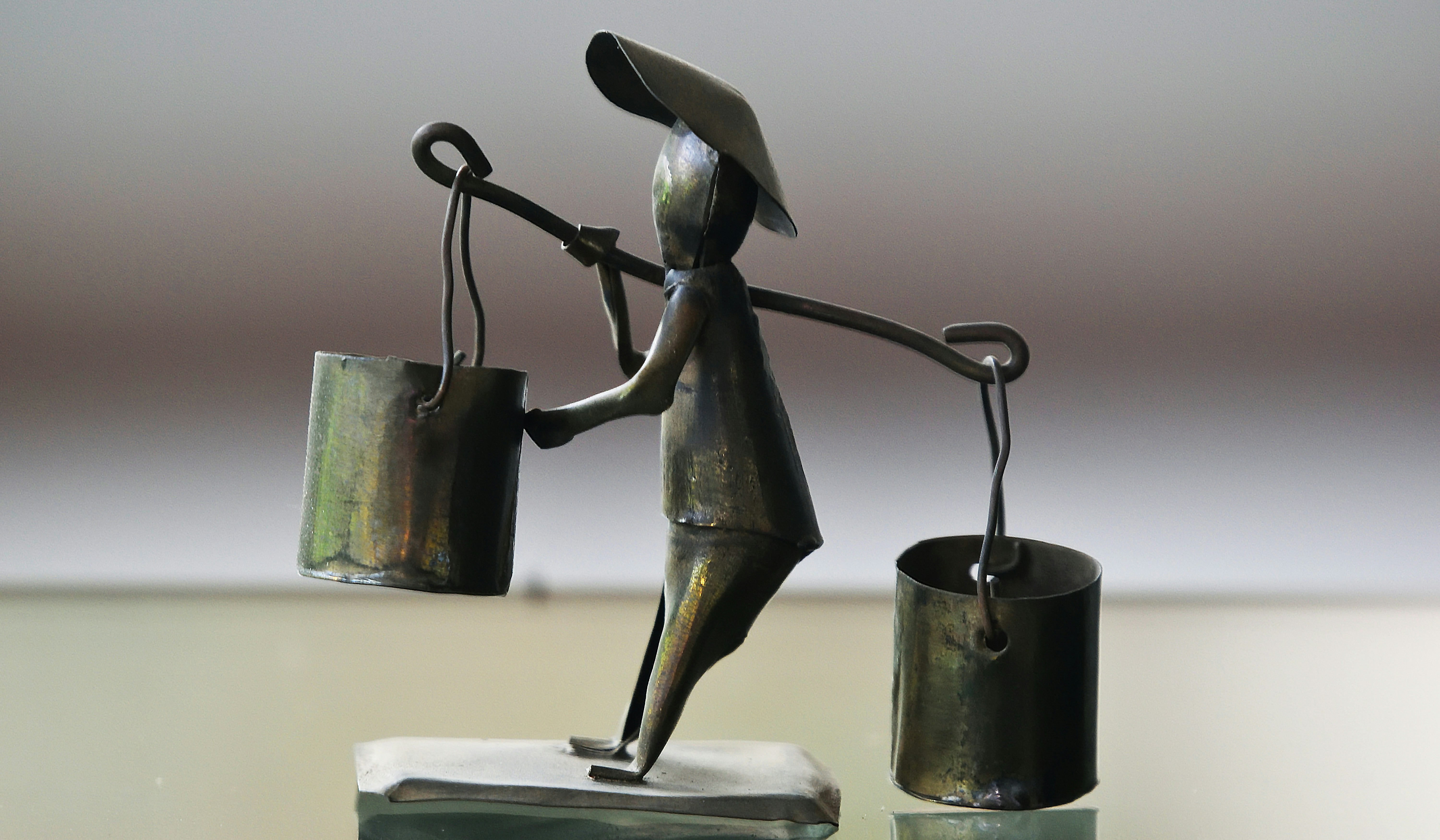
Feature Image Credit: R Sen, unsplash.com/photos/a-few-metal-pots-ehsEah_Hzb0
The views and opinions expressed in the Inspiration Daily blog are solely those of the original authors and contributors. These views and opinions do not necessarily represent those of Diocesan, the Diocesan staff, or other contributors to this blog.