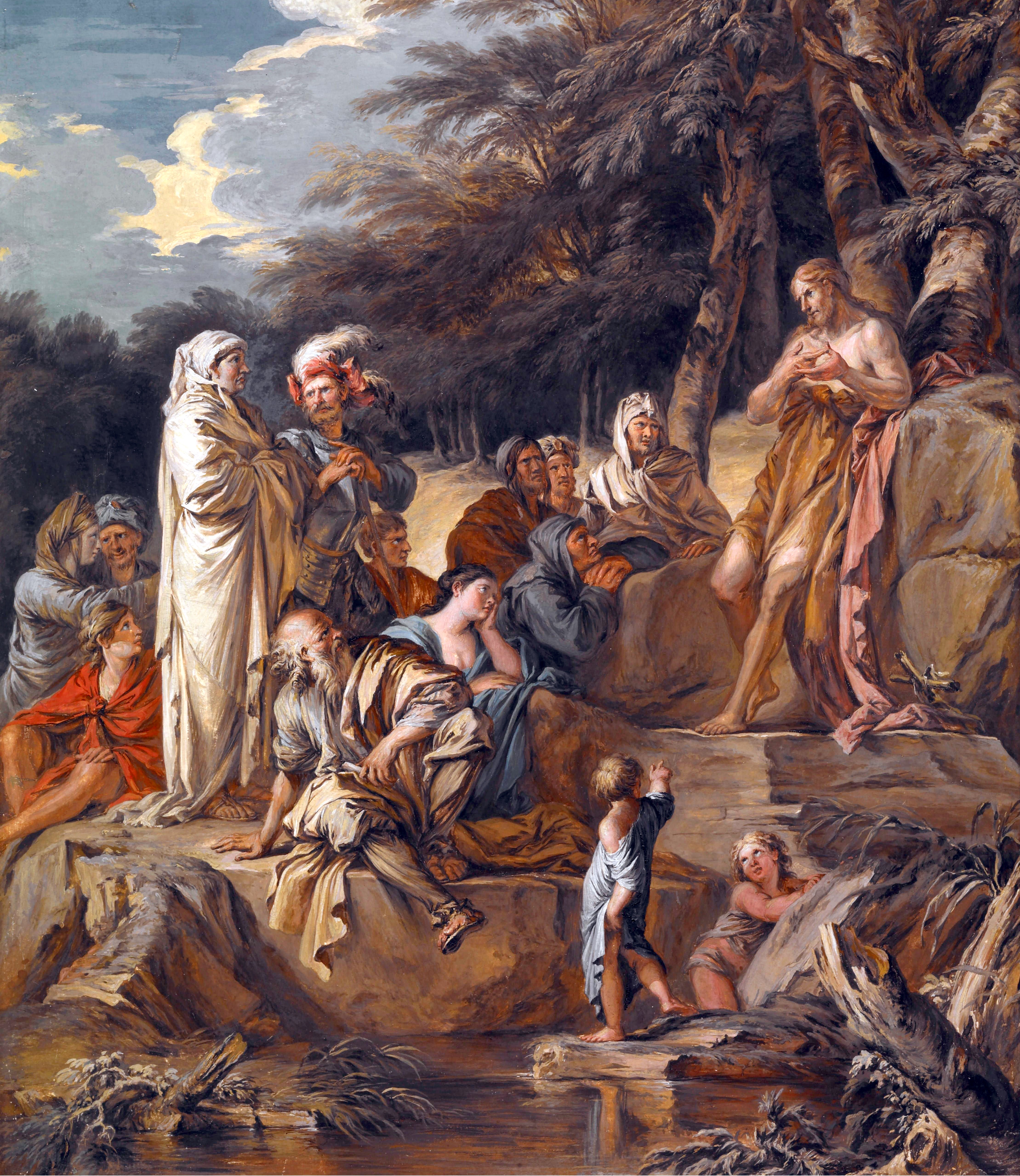
Click here for daily readingsThe scene of today’s Gospel reading takes place across from the Jordan River. John, the cousin of Jesus, has been baptizing people in the waters of the Jordan, and his inquisitors want to know why. They demand to know who he is and with what authority he acts.
John’s testimony evokes the feel of a courtroom interrogation: John “admitted, and he did not deny it, but admitted.” A denial would attempt to close the door on the conversation, but admission allows the door to open. John is not shying away from the question, “Who are you?” We can imagine his tone, full of anticipation, as he replies, “I am not the Christ.” John the Baptist knows who he is, and he knows who he is not, and he wants to tell us about the One who Is.
The priests and Levites, though, are unsatisfied and continue to take John through a process of elimination: If you’re not the Christ, then who are you? If not Elijah, then who? If not the prophet, then who? Finally, John replies and fully claims his identity: “‘I am the voice of the one crying in the desert, ‘Make straight the way of the Lord.’”
Long ago, the prophet Isaiah spoke of this voice offering hope to God’s people, a promise of comfort, encouragement and empowerment—the voice that would reveal the glory of the Lord (Is 40:5). John is that voice, and he is announcing that the Lord’s glory has finally arrived and we should prepare to receive Him. This is good news!
There is so much we can learn from the testimony of John the Baptist, but perhaps most importantly is a lesson about the power of identity. Do we know who we are and who we are not? Or, better yet, do we know Whose we are? John the Baptist did, so he did not cower when he was questioned. He was not only prepared to speak the truth, but to claim that truth as the authority for his actions.
Today we are invited to consider how to make straight the path of the Lord in our own lives. Let us look to John the Baptist as a model of someone whose identity is completely rooted in the glory of the Lord. And then, when we are called to give testimony, may we draw upon the grace and authority of our own baptism. Our identity rests in Christ as well. Let us claim that truth today.
La escena del Evangelio de hoy transcurre frente al río Jordán. Juan, el primo de Jesús, ha estado bautizando en las aguas del Jordán, y sus inquisidores quieren saber por qué. Exigen saber quién es y con qué autoridad actúa.
El testimonio de Juan evoca la sensación de un interrogatorio judicial: Juan “reconoció y no negó quién era”. Una negación intentaría cerrar la puerta a la conversación, pero la admisión permite que la puerta se abra. Juan no rehúye la pregunta: “¿Quién eres, pues?”. Podemos imaginar su tono, lleno de anticipación, al responder: “Yo no soy el Mesías”. Juan el Bautista sabe quién es y quién no es, y quiere hablarnos de Aquel que Sí es.
Sin embargo, los sacerdotes y levitas están insatisfechos y siguen sometiendo a Juan a un proceso de eliminación: Si no eres el Cristo, ¿quién eres? Si no eres Elías, entonces ¿quién eres? Si no eres el profeta, ¿quién eres? Finalmente, Juan responde y afirma plenamente su identidad: “Yo soy la voz del que grita en el desierto: ‘Enderecen el camino del Señor’”.
Hace mucho tiempo, el profeta Isaías habló de esta voz que ofrecía esperanza al pueblo de Dios, una promesa de consuelo, ánimo y empoderamiento: la voz que revelaría la gloria del Señor (Is 40,5). Juan es esa voz, y anuncia que la gloria del Señor finalmente ha llegado y que debemos prepararnos para recibirla. ¡Estas son buenas noticias!
Hay mucho que podemos aprender del testimonio de Juan el Bautista, pero quizás lo más importante es una lección sobre el poder de la identidad. ¿Sabemos quiénes somos y quiénes no somos? O, mejor aún, ¿sabemos a quién pertenecemos? Juan el Bautista sí lo sabía, así que no se acobardó cuando lo cuestionaron. No solo estaba dispuesto a decir la verdad, sino a afirmar que esa verdad era la autoridad de sus acciones.
Hoy se nos invita a reflexionar sobre cómo enderezar el camino del Señor en nuestras vidas. Consideremos a Juan el Bautista como modelo de alguien cuya identidad está completamente arraigada en la gloria del Señor. Y entonces, cuando seamos llamados a dar testimonio, que podamos inspirarnos en la gracia y la autoridad de nuestro propio bautismo. Nuestra identidad también reside en Cristo. Reclamemos esta verdad hoy.
 Raine Pyne is a longtime public school educator. She is married to Greg, who is also an educator. They have five sons, three dogs, and one cat, plus hundreds of adolescent students and countless stacks of books. Raine is a former parish catechist and women’s retreat leader. She is a student at the Theology of the Body Institute and a member of the Word on Fire Institute’s Writing Community. She is passionate about learning, language, and the ever deepening journey of faith.Feature Image Credit: Joseph Goupy, art.diocesan.com/stock-photo/st-john-preaching-in-the-wilderness-21126/The views and opinions expressed in the Inspiration Daily blog are solely those of the original authors and contributors. These views and opinions do not necessarily represent those of Diocesan, the Diocesan staff, or other contributors to this blog.