
Let’s say every day you go to work, you take the city bus. You get on and there are already people riding that route. While most people riding a bus adhere to a strict code of silence, some people inevitably start chatting. When you disembark at your stop, those chatty people may still be at it. So while you couldn’t help hearing some of their conversation, it was only bits and pieces, with important parts occurring before and after your little bus ride to work.
And so it is with today’s Scripture readings. You read them and you can’t help but feel you’re missing something. The opening reading, from the second Book of Samuel, is the very beginning of the book, yet the opening sentence tells us something went on before that: “David returned from his defeat of the Amalekites …” (2 Samuel 1:1) OK, so there was a battle. But David’s battle victory isn’t even the issue here, because a stranger arrives to tell him that Saul was in a battle, it didn’t go well, and he perished. That account is at the end of the first Book of Samuel.
David then mourns Saul’s death. But wait a minute — wasn’t Saul actively trying to kill David in that first book? Saul did not take kindly to David being anointed by Samuel to replace him, but even though he had cause and the opportunity to do so, David never tried to end Saul’s life. David remained righteous even while enduring torment from Saul.
The snippet of Mark’s Gospel we read today is even shorter and more obscure. Jesus returns to the house He stayed at in Capernaum. The crowds followed and kept Him from doing typical things at home like eating. And his relatives decided he was crazy.
In Mark’s Gospel things happen at a pretty rapid pace. Earlier in Mark Chapter 3, Jesus healed a man’s withered hand, and He named his 12 Apostles. After our passage, He is accused of being from Beelzebul and counters how can that even work? With those vivid passages, it makes you wonder why today’s passage was even chosen.
Let’s put ourselves in the scene, just as if we would have gotten on the morning bus and it was playing out right before us. Whose side would we be on? That of the crowd, who wanted to see more and know more about Jesus? Or that of His relatives, who thought they knew Him and disapproved of these latest events? If nothing else, today’s Gospel should entice us to learn more — more about Jesus, His mission, His work, His goals, His purpose, and His purpose for us. Bits and pieces can be compelling, just as these ones should compel us to want to know more so as to love and serve Him better.
Digamos que todos los días vas al trabajo y tomas el autobús urbano. Te subes y ya hay gente en esa ruta. Aunque la mayoría de los que viajan en autobús se adhieren a un estricto código de silencio, es inevitable que algunos empiecen a charlar. Al bajar en tu parada, puede que esas personas sigan charlando. Así que, aunque no pudiste evitar escuchar parte de su conversación, solamente eran fragmentos, con partes importantes que ocurrían antes y después de tu breve viaje en autobús al trabajo.
Y lo mismo ocurre con las lecturas bíblicas de hoy. Las lees y sientes que te estás perdiendo algo. La lectura inicial, del segundo libro de Samuel, es el comienzo mismo del libro; sin embargo, la frase inicial nos dice que algo sucedió antes: “En aquellos días, después de derrotar a los amalecitas, David se fue a Siquelag…” (2 Samuel 1,1). Bueno, hubo una batalla. Pero la victoria de David ni siquiera es el asunto principal, porque un extraño llega para decirle que Saúl estaba en una batalla, que no salió bien y que pereció. Ese relato se encuentra al final del primer libro de Samuel.
David lamenta la muerte de Saúl. Pero esperen un momento: ¿no intentaba Saúl activamente matar a David en ese primer libro? A Saúl no le agradó que Samuel ungiera a David para reemplazarlo, pero aunque tenía motivos y la oportunidad para hacerlo, David nunca intentó acabar con su vida. David permaneció justo incluso mientras soportaba el tormento de Saúl.
El fragmento del Evangelio de Marcos que leemos hoy es aún más corto y confuso. Jesús regresa a la casa donde se alojaba en Capernaúm. La multitud lo seguía y le impedía hacer cosas típicas de casa, como comer. Y sus familiares pensaron que estaba loco.
En el Evangelio de Marcos, los acontecimientos suceden a un ritmo bastante rápido. Anteriormente, en el capítulo 3 de Marcos, Jesús sanó la mano seca de un hombre y nombró a sus doce apóstoles. Después del pasaje de hoy, se le acusa de ser de Beelzebul y se pregunta cómo puede ser eso. Con esos vívidos pasajes, uno se pregunta por qué se eligió el de hoy.
Pongámonos en la escena, como si hubiéramos subido al autobús de la mañana y todo estuviera sucediendo delante de nuestros ojos. ¿De qué lado estaríamos? ¿El de la multitud, que quería ver y saber más sobre Jesús? ¿O el de sus familiares, que creían conocerlo y desaprobaban estos últimos acontecimientos? Como mínimo, el Evangelio de hoy debería motivarnos a aprender más: más sobre Jesús, su misión, su obra, sus metas, su propósito y su propósito para nosotros. Los fragmentos pueden ser cautivadores, así como estos deberían impulsarnos a querer saber más para amarlo y servirlo mejor.
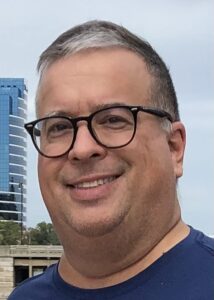 Mike Karpus is a regular guy. He grew up in Michigan’s Upper Peninsula, graduated from Michigan State University and works as an editor. He is married to a retired Catholic school principal, raised two daughters who became Catholic school teachers at points in their careers, and now relishes his three young grandchildren. He serves on a Catholic school board and has served on pastoral councils, a building committee and a parish stewardship committee. He currently is a lector at Mass, a Knight of Columbus, vice president of a memorial scholarship committee and a board member of the local Habitat for Humanity organization. But mostly he’s a regular guy.
Feature Image Credit: Jakob Scholz, pexels.com/photo/bus-bench-seats-808846/
The views and opinions expressed in the Inspiration Daily blog are solely those of the original authors and contributors. These views and opinions do not necessarily represent those of Diocesan, the Diocesan staff, or other contributors to this blog.