
God is further beyond us than we can ever imagine. He is infinite, and His power, knowledge, love, and existence are on a level unfathomably different than ours. He has given us everything we have from His own plenitude, all that He Himself possesses effortlessly, in an instant, existing from eternity in perfection. “Forty days you spent in scouting the land; forty years shall you suffer for your crimes: one year for each day. Thus you will realize what it means to oppose me” (Num. 14:34). Against the background of God’s absolute transcendence, the first reading makes more sense. Any offense against God is infinitely more offensive than one against another person; God is infinitely greater than us, and demands respect according to His nature.
Many saints recognize this relationship between God and man, speaking of the horror of committing even a single venial sin. We do not recognize just how terrible sin is, just how heavy a thing it is to go against Goodness, Love, Holiness, Mercy, and Justice Himself. A move toward sin is a move away from all that is good, even away from all that keeps us in existence. It is an embrace of nothingness.
This perspective helps us understand God’s severity in response to sin. The sin of the Israelites might not seem so wicked when we hear it read to us, but we must keep in mind the Lord’s own justice: He does not assign a penalty of forty years of wandering followed by death in the desert arbitrarily, but because He deems it the proper punishment.
At the same time, we must remember that God is infinitely perfect. In a single instant: we can zero in on His perfect justice while forgetting that in some mysterious way, He works so spectacularly within His creation as to take on flesh and dwell within us. Jesus interacts with a Canaanite woman who, technically speaking, He shouldn’t have spoken with, and honors her by praising her faith and healing her daughter. He makes Himself available to her and shows her His power and mercy.
Coming down in the Incarnation and remaining with us in the sacramental priesthood, the Holy Eucharist, and a number of other ways through the sacraments and sacramentals, God makes it clear that His transcendence is not just something at which we must tremble in fear: it is also a cause for great rejoicing. God chooses to make Himself available to us in means specifically suited to our nature and our state in life, and He becomes one with us in a way we could have never imagined, acting in us through grace and allowing us to become adopted children of the Father. He reaches out to us and forgives even our worst offenses, no matter how offensive they are.
Dios está más allá de nosotros, mucho más de lo que jamás podamos imaginar. Es infinito, y Su poder, conocimiento, amor y existencia están en un nivel insondablemente diferente al nuestro. Nos ha dado todo lo que tenemos de Su propia plenitud, todo lo que Él mismo posee sin esfuerzo, en un instante, existiendo desde la eternidad en perfección. “Así como ustedes emplearon cuarenta días en explorar el país, así cargarán con sus pecados cuarenta años por el desierto, a razón de un año por día. Así sabrán lo que significa desobedecerme.” (Núm 14,34). En el contexto de la trascendencia absoluta de Dios, la primera lectura tiene más sentido. Cualquier ofensa contra Dios es infinitamente más ofensiva que una contra otra persona; Dios es infinitamente más grande que nosotros, y exige respeto de acuerdo a Su naturaleza.
Muchos santos reconocen esta relación entre Dios y el hombre, hablando del horror de cometer un solo pecado venial. No reconocemos cuán terrible es el pecado, cuán pesado es ir contra la Bondad, el Amor, la Santidad, la Misericordia y la Justicia misma. Un movimiento hacia el pecado es un alejamiento de todo lo que es bueno, incluso de todo lo que nos mantiene en la existencia. Es un abrazo a la nada.
Esta perspectiva nos ayuda a comprender la severidad de Dios en respuesta al pecado. El pecado de los israelitas puede no parecer tan malo cuando lo oímos leer, pero debemos tener presente la justicia del mismo Señor: Él no asigna una pena de cuarenta años de vagar seguidos de muerte en el desierto arbitrariamente, sino porque le parece el castigo apropiado.
Al mismo tiempo, debemos recordar que Dios es infinitamente perfecto. En un solo instante: podemos concentrarnos en Su perfecta justicia mientras olvidamos que, de alguna manera misteriosa, obra tan espectacularmente dentro de Su creación como para hacerse carne y habitar entre nosotros. Jesús interactúa con una mujer cananea con la que, técnicamente, no debería haber hablado, y la honra alabando su fe y sanando a su hija. Se pone a su disposición y le muestra su poder y su misericordia.
Al Encarnarse y permanecer con nosotros en el sacerdocio sacramental, en la Sagrada Eucaristía y en muchas otras formas a través de los sacramentos y los sacramentales, Dios deja claro que Su trascendencia no es solo algo por lo que debemos temblar de miedo: es también motivo de gran regocijo. Dios elige ponerse a nuestra disposición en medios específicamente adaptados a nuestra naturaleza y a nuestro estado de vida, y se hace uno con nosotros de una manera que nunca hubiéramos imaginado, actuando en nosotros por gracia y permitiéndonos convertirnos en hijos adoptivos del Padre. Se acerca a nosotros y perdona incluso nuestras peores ofensas, sin importar cuán ofensivas sean.
 David Dashiell is a freelance author and editor in Nashville, Tennessee. He has a master’s degree in theology from Franciscan University, and is the editor of the anthology Ever Ancient, Ever New: Why Younger Generations Are Embracing Traditional Catholicism.
Feature Image Credit: Dimitri Conejo Sanz, cathopic.com/photo/1311-sunset-in-pontevedra

 Merridith Frediani loves words and is delighted by good sentences. She also loves Lake Michigan, dahlias, the first sip of hot coffee in the morning, millennials, and playing Sheepshead with her husband and three kids. She writes for Catholic Mom, Diocesan.com, and her local Catholic Herald. Her first book Draw Close to Jesus: A Woman’s Guide to Adoration is available at Our Sunday Visitor and Amazon. You can learn more at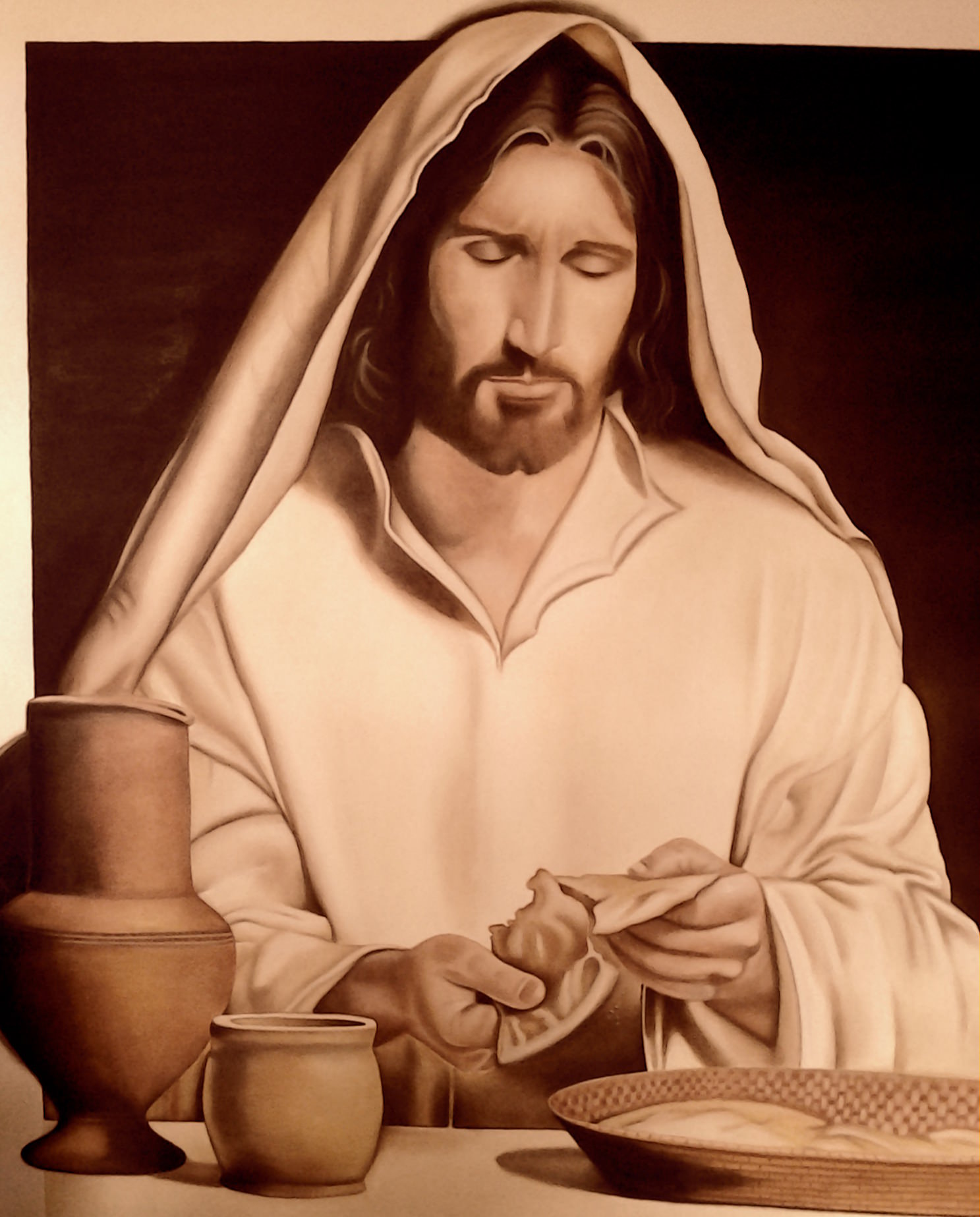
 Kathryn Mulderink, MA, is married to Robert, Station Manager for Holy Family Radio. Together they have seven children (including Father Rob), and seven grandchildren. She is President of the local community of Secular Discalced Carmelites and has published five books and many articles. Over the last 30 years, she has worked as a teacher, headmistress, catechist, Pastoral Associate, and DRE, and as a writer and voice talent for Catholic Radio. Currently, she serves the Church by writing and speaking, and by collaborating with various parishes and to lead others to encounter Christ and engage their faith. Her website is



 Emily Jaminet is a Catholic author, speaker, radio personality, wife, and mother of seven children. She earned a bachelor’s degree in mental health and human services from the Franciscan University of Steubenville. She is the co-founder of
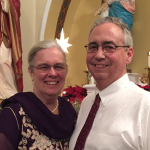 Sheryl is happy to be the number 1 cheerleader and supporter for her husband, Tom who is a candidate for the Permanent Diaconate in the Diocese of Kalamazoo. They are so grateful for the opportunity to grow together in this process. Sheryl’s day job is serving her community as the principal for St. Therese Catholic School in Wayland, Michigan. Since every time she thinks she gets life all figured out, she realizes just how far she has to go, St. Rita of Cascia is her go-to Saint for intercession and help. Home includes Carlyn, a very, very goofy Golden Retriever and Lucy, our not-so-little rescue puppy.
 Dakota lives in Denver, CO with her husband, Ralph, and their two sons, Alfie & Theophilus. She is the Dean of Enrollment Management for Bishop Machebeuf High School where her husband also teaches. You can find Dakota at the zoo or a brewery with her family or with her nose in a book at home. For more of Dakota’s writing check out



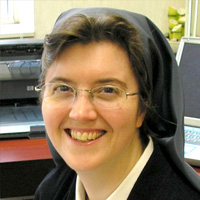
 Leslie Sholly is a Catholic, Southern wife and mother of five, living in her hometown, Knoxville, Tennessee. She graduated from Georgetown University with an English major and Theology minor. She blogs at
  1-800-994-9817