
Happy Thanksgiving! I would like to start by asking you to read today’s Gospel from Luke 21:20-28. If you are a regular Bible reader, this might be a passage that you would like to skip over. Why? Because, after you read it you may say something like, “GULP! Don’t blame me, I’m just the messenger.”
If you read it very carefully, you might say to yourself, “Boy, this sounds familiar.” And it is. Perhaps you have noticed that Mother Nature is raising havoc all over the world. Perhaps more than any other time in our lives. During Jesus’ time on earth there were famines and wars. Fast forward to today and guess what? There are still famines and wars. There’s also a lot of darkness going on in the area of trying to change oneself into another gender and the enormous amount of babies that are dying in the womb.
The Scripture passage above is full of gloom and doom, but did you know that if something big is coming the Lord will let his people know? For example, before the destruction of Jerusalem in the year 70, God let his people know so the Christians could evacuate before it happened.
So how can we make good after all the destruction that the Lord says is coming? You know who wins in the end, don’t you? Based on that we can find the good. This is a time of purification. It can come in many ways, tailored to you and tailored to me.
I believe that this is a time when we should take a good look at forgiveness. We can start with the Our Father and review what it says: “Forgive us our trespasses as we forgive those who trespass against us.” Read that again. We are asking the Lord to forgive us and he will if we forgive others. Whoa! I never really read it that way. Jesus also said you cannot love Him and hate your neighbor. Something to reflect on…
So, where is the joy in all this? It’s found in the fact that Jesus Christ went through his passion and cross and rose again to save us from our sins. Thank you Jesus! If we are weak in our faith we need to ask the Lord for more faith and he will give it to us. Why? Because he wants all of God’s people to be with him forever and for that, we can be truly thankful!
Serving with joy!
¡Feliz Día de Acción de Gracias! Me gustaría comenzar pidiéndote que leas el Evangelio de hoy de Lucas 21,20-28. Si lees la Biblia con frecuencia, este podría ser un pasaje que te gustaría pasar por alto. ¿Por qué? Porque, después de leerlo, puedes decir algo como: “¡Qué miedo! No me eches la culpa, soy el mensajero nada más.”
Si lo lees con mucha atención, puedes decirte a ti mismo: “Vaya, esto me suena familiar”. Y lo es. Quizás hayas notado que la Madre Naturaleza está sembrando el caos por todo el mundo. Quizás más que en cualquier otro momento de nuestras vidas. Durante el tiempo de Jesús en la tierra hubo hambrunas y guerras. Avanzamos rápidamente hasta el día de hoy y ¿adivina qué? Todavía hay hambrunas y guerras. También hay mucha oscuridad en el área de intentar cambiarse a otro género y la enorme cantidad de bebés que mueren antes de nacer.
El pasaje de la Escritura mencionada arriba está lleno de pesimismo y fatalismo, pero ¿sabías que si algo grande está por venir, el Señor se lo hará saber a su pueblo? Por ejemplo, antes de la destrucción de Jerusalén en el año 70, Dios le hizo saber a su pueblo para que los cristianos pudieran evacuar antes de que sucediera.
Entonces, ¿cómo podemos ver el bien después de toda la destrucción que el Señor dice que viene? Sabes quién gana al final, ¿no? A base de eso podemos encontrar lo bueno. Estamos en un tiempo de purificación. Puede venir de muchas formas, individualizo para ti o para mi.
Creo que es buen momento para analizar a fondo el tema del perdón. Podemos comenzar con el Padrenuestro y revisar lo que dice: “Perdona nuestras ofensas, como también nosotros perdonamos a los que nos ofenden”. Léelo de nuevo. Le estamos pidiendo al Señor que nos perdone y sí lo hará si perdonamos a los demás. ¡Guau! Nunca lo había leído de esa manera. Jesús también dijo que no puedes amarlo a Él y al mismo tiempo odiar al prójimo. Es algo para reflexionar…
Entonces, ¿dónde está la alegría en todo esto? Se encuentra en el hecho de que Jesucristo pasó por su pasión y cruz y resucitó para salvarnos de nuestros pecados. ¡Gracias Jesús! Si somos débiles en nuestra fe, debemos pedirle al Señor más fe y él nos la dará. ¿Por qué? ¡Porque él quiere que todo el pueblo de Dios esté con él para siempre y por eso podemos estar verdaderamente agradecidos!
¡Sirviendo con alegría!
 Deacon Dan Schneider is a retired general manager of industrial distributors. He and his wife Vicki have been married for over 50 years. They are the parents of eight children and thirty-one grandchildren. He has a degree in Family Life Education from Spring Arbor University. He was ordained a Permanent Deacon in 2002. He has a passion for working with engaged and married couples and his main ministry has been preparing couples for marriage.
Featured Image Credit: Alex Shute, unsplash.com/photos/a-scrabble-type-block-spelling-out-the-word-forgiveness-b7QwXDDEwv8

 Kathryn Mulderink, MA, is married to Robert, Station Manager for Holy Family Radio. Together they have seven children (including Father Rob), and eleven grandchildren. She is President of the local community of Secular Discalced Carmelites and has published five books and many articles. Over the last 30 years, she has worked as a teacher, headmistress, catechist, Pastoral Associate, and DRE, and as a writer and voice talent for Catholic Radio. Currently, she serves the Church by writing and speaking, and by collaborating with various parishes and to lead others to encounter Christ and engage their faith. Her website is
 Merridith Frediani loves words and is delighted by good sentences. She also loves Lake Michigan, dahlias, the first sip of hot coffee in the morning, millennials, and playing Sheepshead with her husband and three kids. She writes for Catholic Mom, Diocesan.com, and her local Catholic Herald. Her first book Draw Close to Jesus: A Woman’s Guide to Adoration is available at Our Sunday Visitor and Amazon. You can learn more at
 Kate Taliaferro is an Air Force wife and mother. She is blessed to be able to homeschool, bake bread and fold endless piles of laundry. When not planning a school day, writing a blog post or cooking pasta, Kate can be found curled up with a book or working with some kind of fiber craft. Kate blogs at




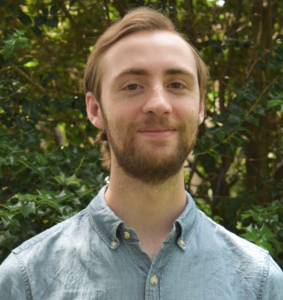 David Dashiell is a freelance author and editor in the Nashville, Tennessee area. He has three children, a degree in theology, and enjoys writing about philosophy, theology, culture, music, and comedy. You can find his personal blog, Serious Daydreams, on

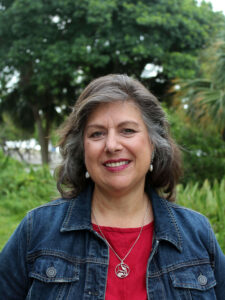 Deanna G. Bartalini, M.Ed.; M.P.A., is a certified spiritual director, writer, speaker and content creator. The
 Mike Karpus is a regular guy. He grew up in Michigan’s Upper Peninsula, graduated from Michigan State University and works as an editor. He is married to a Catholic school principal, raised two daughters who became Catholic school teachers at points in their careers, and now relishes his two grandchildren, including the older one who is fascinated with learning about his faith. He also has served on a Catholic school board, a pastoral council and a parish stewardship committee. He currently is a lector at Mass, a Knight of Columbus, Adult Faith Formation Committee member and a board member of the local Habitat for Humanity organization. But mostly he’s a regular guy.
 1-800-994-9817