Mary

Advent: Mary’s Song of Trust And Acceptance

TODAY’S ADVENT REFLECTION FOR THE

SOLEMNITY OF THE IMMACULATE CONCEPTION, ADVENT 2016

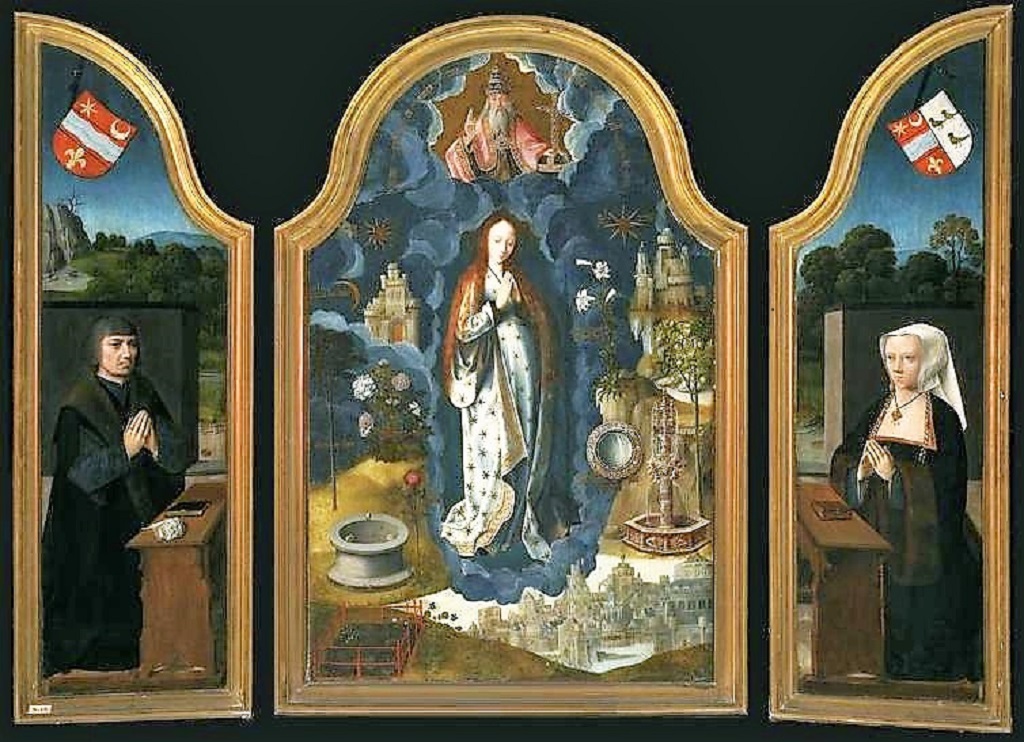
A little history of this dogma and liturgical Feast Day in the Christian tradition might be in order. Pope Pious IX, in agreement with the Catholic Church’s first Ecumenical Council, made official a long-held belief that Mary, the mother of Jesus, was conceived in her mother’s womb without the effects of, or in any way presence of, sin or stain of sin. This belief had an up-and-down history of acceptance and rejection throughout its history. Some monasteries and dioceses chose to celebrate this devotion while others actually forbade it. There are writings in the early centuries of the Church which attempt to explain this mystery from various aspects. Is it based in Scripture? In our First Reading for today’s Eucharistic liturgy there are the familiar verses about God’s promise that there would be a blockage between a “woman” and the serpent or symbol of evil. The first woman, Eve, tasted sin, the second woman would not.

The Gospel for today is known as the Annunciation, and Mary, a woman, is greeted as “full of grace”. This phrase has been used also as a scriptural proof. I wonder if Gabriel had said, “Hail Sinless One from the moment of your soul’s entering your-bodily substance”, would it have made this mystery any easier for acceptance. Would Mary have understood any more clearly? We are dealing with biblical and not biographical history. We love sound-bite clarity which leads us to certainty and agreement. We are left with the same verbal response as Mary gave to Gabriel, “How can this be?” My question is “Why can this not be?”

There have to be doubts and questions and mysteries and fears in order to have faith, trust and love. It’s just the way of things. Virginal births, bodily assumption into heaven, being Mother of God, are strange and impossible according to our categories.

I was listening recently to a man who told me that he once was Catholic, but left that community, because of “Man-made beliefs.” I asked him which ones bothered him the most. He replied that the one about not eating hamburgers on Friday and the one about adoring Mary. He said he basically didn’t like dogmas of any kind. I knew that was going to be a short conversation; no sound-bites availing.

I am writing this the day before the national election here in the United States. There have been all kinds of dogmatic statements by all kinds of candidates which are taken as truth by those who want to take them so. Those who reject them as false do so with their facts and counter-statements. I am wondering how many voters change their choices because of stated facts or challenges. There must be ambiguity for the possibility of choice. Mary did not have a choice to be born or conceived without sin. She did not have a vote about being enrolled in the “first census” nor giving birth in a stable. She did not have an option about standing at the foot of the cross. She did have an opportunity to say “yes” to the mystery of her life. Her obedience, her listening, her eating of the angelic apple of invitation began the final project of God’s completing creation. The old Adam-and-Eve partnership is represented and refigured in the new Mary-and-Jesus duet. Adam hid himself in shame, because he knew himself to be naked. Jesus clothed Himself in shameless flesh which he had received from the shameless body and soul of His mother, Mary. Both sang the song of trust and grateful acceptance to the invitations to their facing the fears, doubts, and questions in their lives of immaculate receptions.

Today’s reflection was written by Fr. Larry Gillick, SJ, the director of Deglman Center for Ignatian Spirituality at Creighton University. Gillick says, “I enjoy sharing thoughts on the Daily Reflections.  It is a chance to share with a wide variety of people in the Christian community experiences of prayer and life which have been given to me.  It is a bit like being in more places than just here.  We actually get out there without having to pay airlines to do it.  The word of God is alive and well.”

yoke that is easy

Advent: A Yoke That Is Easy And Light

TODAY’S ADVENT REFLECTION FOR THE 2ND WEDNESDAY OF ADVENT, 2016

St. Ambrose (c. 340-397) was not meek.  He was an accomplished poet and orator, and a highly successful advocate and Roman Governor of two Italian provinces before the age of 40.  He was baptized Catholic and consecrated Bishop of Milan within a week.  He intervened in matters of high politics––perhaps the first bishop to do so––and confronted emperors until they unwillingly backed down.  Ambrose was not timid.

However, Ambrose did not seek his authority in possessions nor in his keen intellect nor in his considerable successes. To the contrary, he gave away most of his wealth and was well aware of his own inadequacies as a cleric and theologian.

Ambrose found his authority and strength in God.  In the One who does not grow weary.  In the One whose knowledge is beyond scrutiny.  In the One who is merciful and gracious, slow to anger and abounding in kindness.  Ambrose, like all saints, became more and more like the God he came to know and to believe in.

That is the yoke that Jesus asks us to carry.  A yoke that is easy and light because both Jesus and we are tethered to it.  We share the load.  And because of this close bond, we come to know Jesus more intimately.  We come to love what he loves, to respect what he respects, and to reverence what he reverences.  We become more and more like Jesus, the One we have come to believe in.  In this sense, we give birth to the Messiah in this time and place and there is no better present that we can give or receive this Christmas.

Fr. Philip Shangraw, D. Min., is a priest of the Diocese of Grand Rapids.

spiritual journey

Advent: Long lay the world, in sin and error pining

Today’s Advent reflection for the 2nd Tuesday of Advent, 2016

Like the deer that longs for running streams, so my soul longs for God.—Psalm 42:1

Jesus’ first interaction with mankind in the Gospel of John is kind of awkward. He noticed two men following him and stopped, looked straight at them, and said, “What are you looking for?” I think he wanted them to stop and ask themselves that question before taking another step. He wants us to ask it of ourselves, too—because that question is the start of the spiritual journey.

Our longing for “something more” than this world can give us is part of who we are. It’s a longing that St. Thomas Aquinas used as evidence for God. A stomach’s growling would make no sense if there were no such thing as food. What about that “growling” in the depths of our hearts for something no amount of worldly “stuff” can satisfy? That growling has led man to think of God since the dawn of time.

If we’re losing touch with God today it’s probably because we’ve lost touch with ourselves. We tend to forget our deepest longings and highest ideals when they’re drowned out by the “noise” of passing news and countless to-dos. Or worse, we tend to suppress our highest hopes when life leaves us hurt and disappointed.

I want you to give yourself permission to ask the dangerous questions: “What do I want out of life? What am I looking for? Really?”

Beneath every answer from “a happy marriage” to “a big fat paycheck” to “fame and fortune” (all of which you may or may not get) is a deeper longing. We want more. We want happiness. We want joy. We want peace. We want LOVE. And we don’t want a little of those things. We want an infinite supply—more of it than this whole world could possibly give! We want GLORY!

. . . Let yourself feel that longing . . .

That would be cruel advice if that longing had no answer! Thankfully it does have an answer. The one who asked the question “What are you looking for?” is the answer. He just wants you to find that out for yourself. That’s what the spiritual journey is all about.

Chris Stefanick - Guest Author


Chris Stefanick  is an internationally acclaimed author and speaker, who has devoted his life to inspiring people to live a bold, contagious faith. Archbishop Charles J. Chaput, OFM Cap calls Chris, “one of the most engaging young defenders of the Christian faith on the scene today.”  Chris is also the founder of Real Life Catholic, a Denver-based non-profit which operates as the headquarters for Chris’s various initiatives. Above all, Chris is proud to be the husband to his wife Natalie and father to their six children. To learn more about Chris’s work, please visit: www.RealLifeCatholic.com.

Highway

Advent: Get On The Holy Way Highway

Today’s Advent reflection for the 2nd Monday of Advent, 2016

Doesn’t it seem like that one time you really need to get someplace (say, a job interview or a hospital), traffic is completely jammed up? Bumper-to-bumper. Taillights as far as you can see. Your heart is pounding and your thoughts are racing.

Today’s readings are for just this occasion. (Not that you should pull this up on your smartphone while you’re stuck in traffic.) In the first reading, the prophet Isaiah stands in a dry and parched desert. There might not be a traffic jam here, but there is no water either; this place is dead. But Isaiah sees with the eyes of faith: The desert and the parched land will exult; the steppe will rejoice and bloom. “Fear not!” Isaiah proclaims: God will make a way for you in the desert: A highway will be there, called the holy way.”

In the Gospel today, a group of men have a problem. Their friend is ill; paralyzed in fact. They know that Jesus is in their village and they know He has the power to cure. But these men cannot get anywhere near Jesus; the crowd is too large. They are stuck, essentially, in a traffic jam.  But these guys were not going to give up. They hauled their friend, who was on a stretcher, up onto the roof of the house where Jesus was, tore a hole in the roof, and lowered their friend down. Jesus forgave the man’s sins, and then cured him. Clearly, these men knew about the Holy Way Highway.

In our spiritual lives, we often get stuck. We are in a dry, deserted place. God feels a long way from us. We cry out, “Help! God: where are You? I need you!” Or, like the men in the Gospel today, there are such huge obstacles in front of us it seems as if it would be easier to just turn around and go back home. We don’t see a way to get to where we need to go.

We need to get on the Holy Way Highway. It’s there – it’s always a choice. However, God will not force us onto it; we have to get on ourselves. And there are a few “tolls” that have to be paid:

No one unclean may pass over it,
nor fools go astray on it.
No lion will be there,
nor beast of prey go up to be met upon it.
It is for those with a journey to make,
and on it the redeemed will walk. 

We have to be prepared to do the work that God asks. We have to acknowledge our sinfulness and ask for forgiveness. We have to seek out wisdom and counsel. If we are striving to be closer and closer to God, then the highway is open to us.

This Advent, if you’re in a dry and deserted place, if you do not see a way to get closer to God, read the Mass readings for today. Pray over them. Ask God to help you see what you need to do during this holy season to prepare for the Coming of the Lord. Ask God to lead you onto the Holy Way Highway.

[Throughout the 2016 Advent season, we will be bringing you posts from a variety of writers. Our hope is that each of these will be a meaningful way for you to slow down, pray well, and prepare for the coming of our Lord. Today’s blogger is Elise Hilton, who regularly writes the“Living the Good News” blog for Diocesan Trinity Publications. Hilton is a writer, speaker and former educator, who now serves in the Marketing & Communications Department for Diocesan Trinity Publications. She is also an avid reader, mom of five and passionate about music. Today’s Mass readings may be found here.]

courage hope

Advent: Seeking The Lord With Courage And Hope

Today’s Advent reflection for the 1st Friday of Advent, 2016

We enter Advent hopeful and anticipatory!  Like children waiting for Christmas?  Or is there something else much more meaningful that we can be doing during Advent?  For how much more can we hope?  Isaiah tells us that all good things are possible!  There is a gift here for everyone in this passage.  Those of us who are concerned about the environment may read that the earth will be restored.  Those of us in need of physical healing might read that we will be healed.  If we are in confusion or sadness, we will anticipate being lifted out of gloom and darkness.  The lowly and poor hear hope that those who tyrannize them or who are too lofty to care about them will disappear from their lives.  And what a relief to hear that evil will be cut off and the just will be vindicated!

In this passage Isaiah conveys a powerful message that the Lord God wants us to know that the Lord is in our midst!  There will be no mistaking that we will see the work of his hands.  The people of God will be so impressed they will reverence the God of Israel and keep his name holy.  The weak and wayward in spirit will acquire understanding and those who find fault will get redirected.  Wow!  That about includes everything on my Christmas list!

So what is our response to this amazing news?  Do we see Advent as the time to sit back and wait for all these good things to happen to and for us?  Like children wait for Santa Claus?  No, it can be more than that!  The Psalm for today says we can ask for even more than Isaiah says is coming.  We can ask for entry into the house of the Lord where we may gaze on the loveliness of the Lord and contemplate the beauty of his temple all the days of our lives.  There we shall see the bounty of the Lord in the land of the living.  But there is a catch.  The Psalmist says we have to wait…..it seems that one of the tensions with our faith is centered in all that God promises to us is already, but not yet.  There is a lot of waiting going on…..but it is a special kind of waiting, I think.

During Advent, this waiting is something like preparing for Christmas.  It is an active waiting in which we can reflect on what is it that we really need and want beyond that Christmas list.  Children prepare for Christmas by hoping and anticipating, but adults engage in the season by working to make it happen.  In many ways that is the difference between adults and children in terms of our faith as well.  Children aren’t good at waiting.  Becoming an adult means we learn to wait…..while actively engaging in life.   I like to practice Christmas the way I practice Advent, which is to anticipate and celebrate all of the events that lead up to it more than just the events on Christmas Eve or Christmas Day.  I like the busyness of the holiday season.  Christmas is the coming together of families and friends, the sharing of the blessings of hospitality and good food, and the thoughtfulness of considering how we might provide good cheer and good will through gift giving to those we love and those in need.  In those ways, many of us celebrate Christmas all year long.  It keeps us busy!

So then, what is so special about Advent?  I think it is a special time of lifting up our hope to a higher level of consciousness in our faith.  It is a time to wait for the fullness of the Lord with renewed courage.  It is a time to experience more deeply the light and salvation of the Lord in our lives.  That’s why we light all those candles!  And Advent is a time to really grapple with the darkness of our fears and our unbelief.  It is a time to be stouthearted, for what have we to fear?  Jesus tells us in Matthew that he can do anything for us according to our faith….if we just believe.  Like children who believe in Santa Claus?  No, like the adult people of God who will acquire even more understanding of the bounty of the Lord in the land of the living that is here, already.  It is the belief in the hope that the Lord can do anything.  No matter what our circumstances, all things are yet possible.  But to see and understand that, we must have courage in our refuge, in our light, and in our salvation.  So I pray with all of you, that Advent will be for each of us a time of lifting up our hope to a higher level.  I pray that Advent is for each of us a time of courageous hope and anticipation for a better world in which we will share all the gifts we have been given of faith, love, peace, joy, mercy, acceptance, hospitality, self-less giving, and a genuine sense of brotherhood with all of humanity.  If we believe in Jesus, we can do this with him, for him and in him.

[Throughout the 2016 Advent season, we will be bringing you guest posts from a variety of writers. Our hope is that each of these will be a meaningful way for you to slow down, pray well, and prepare for the coming of our Lord. Today’s guest blogger is Barbara Dilly of Creighton University’s Department of Sociology and Anthropology, reflecting on the Mass readings for Friday, December 2.]

trust

Advent: Trust In The Lord Always

Today’s Advent reflection for the 1st Thursday of Advent, 2016

[Throughout the 2016 Advent season, we will be bringing you guest posts from a variety of writers. Our hope is that each of these will be a meaningful way for you to slow down, pray well, and prepare for the coming of our Lord. Today’s guest blogger is Fr. Scott Nolan, reflecting on the Mass readings for Thursday, December 1.]

Trust in the Lord forever, Isaiah invites us.  Trust in the Lord forever.  During this Advent Season we are invited to wait for the coming of the Lord, to prepare the way for Him to come into our world.  Today the book of Isaiah tells us to trust in God forever, to never stop trusting in God’s goodness for us.

And how, we ask, are we to do that?  The one who does the will of the Father in heaven is the one who will enter the Kingdom of heaven, Jesus tells us.  Trust in God and doing the Father’s will are interconnected; they are mutually enriching.  Indeed, Jesus goes on to tell us that doing the Father’s will is like building our house upon a solid foundation.  Perhaps we have seen what happens when a house lacks a solid foundation.  Jesus and those of His time certainly seem to know the devastating effects.

In this time of waiting on the Lord, on vigilance for His coming, we are invited to trust in the Lord, and to know that this trust is founded upon the solid foundation of His goodness for us, and our generous response to that.


Fr. Scott Nolan is a priest of the Diocese of Grand Rapids.  He is currently the pastor of St. Stephen Catholic Church and School in East Grand Rapids, Michigan.

Calling of Saints Peter and Andrew

St. Andrew: A Saint For Advent

Today’s Advent reflection for the 2nd Tuesday of Advent, 2016

[Throughout the 2016 Advent season, we will be bringing you guest posts from a variety of writers. Our hope is that each of these will be a meaningful way for you to slow down, pray well, and prepare for the coming of our Lord. Today’s guest blogger is Fr. Colin Mulhall, reflecting on the Mass readings for November 30, the feast of St. Andrew the Apostle.]

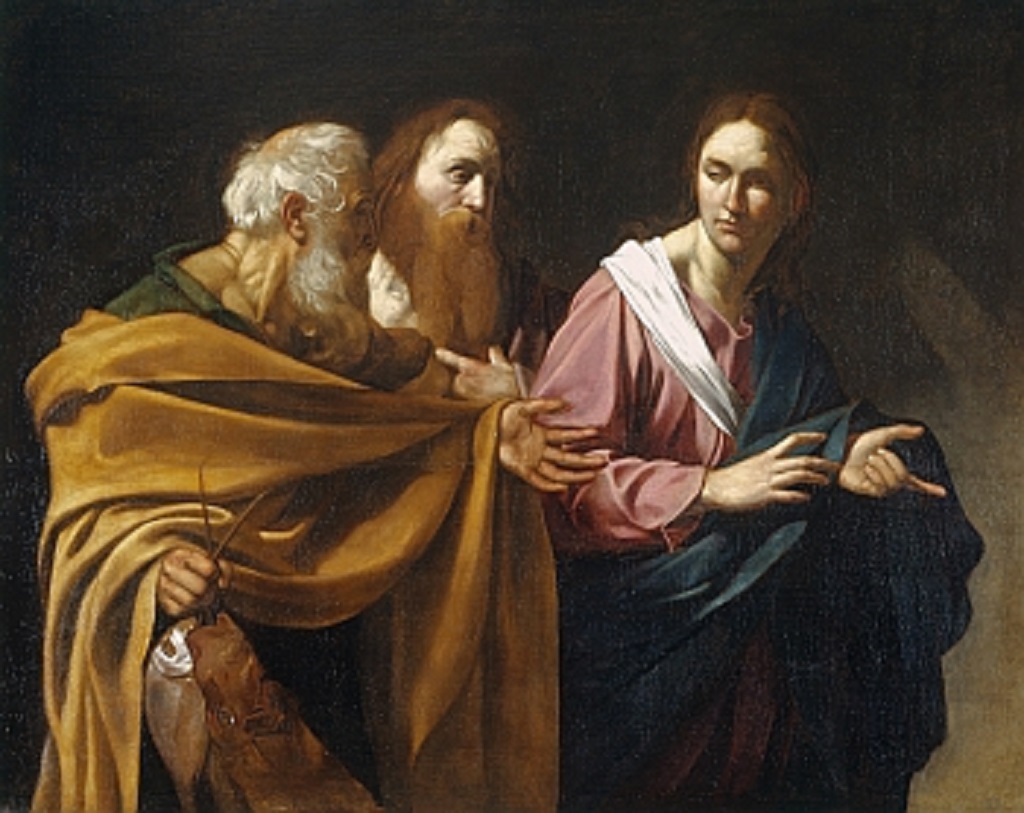
Today we celebrate the Feast of the Apostle St. Andrew, the “first-called” of the Apostles.  He is so named because in the Gospel of John, he is the first of the Apostles to follow Jesus.  Andrew is the one who introduces Peter to Jesus in the Gospel of John.

It might be said that it’s because of a bit of fraternal nagging that Peter met Jesus and eventually became the Prince of the Apostles.  It is fitting that we celebrate his feast during Advent, a time of preparation for the coming of Christ.  Here was a man who was eagerly awaiting the coming of the Messiah, and was most likely a follower of John the Baptist.  When John pointed out Christ, the Lamb of God, Andrew was probably filled with curiosity, and followed Jesus, eventually being invited to “come and see” where He was staying.

The attitude of Andrew, that hopeful expectation of the coming of Christ, is the attitude we are all called to emulate this Advent season.  We are invited to commemorate the coming of the Christ Child, and to prepare ourselves for the triumphant return of Christ in glory.  St. Andrew reminds us Christians that our fundamental attitude is one of preparation and eager anticipation.  We are in a constant of state of tension, an eschatological tension, awaiting the definitive victory of Christ, which has been accomplished in the Paschal Mystery of His suffering, death, Resurrection and Ascension, but has yet to be fully realized.  St. Andrew teaches us what it looks like to wait with the certainty of a hope based in the sure promises of God in Christ Jesus.

Take the opportunity this Advent season to welcome Christ into your life in a new way, letting St. Andrew and all the Saints lead us all into deeper relationship with the Lord.

Fr. Colin Mulhall is associate pastor at St. Robert of Newminster Parish in Ada, MI.


hopes, dreams, desires

Advent: Time Of Hope, Dreams, Desires

Today’s Advent reflection for the 1st Tuesday of Advent, 2016

[Throughout the 2016 Advent season, we will be bringing you guest posts from a variety of writers. Our hope is that each of these will be a meaningful way for you to slow down, pray well, and prepare for the coming of our Lord. Today’s guest blogger is Fr. Aaron Ferris, reflecting on the Mass readings for Tuesday, Nov. 29.]

The Season of Advent is an opportunity to reflect on and purify our desires, hopes, and dreams. Our desires are many and varied, ranging from food to satisfy our hunger to friendship to satisfy our need for love. Our hopes and dreams press on even further. The Prophet Isaiah offers a beautiful reflection on many of our desires, hopes, and dreams: our desire for justice, our hope for the vindication of the downtrodden, our dream of peace and security.

Jesus in the Gospel offers Himself as our satisfaction and fulfillment: “Blessed are the eyes that see what you see.” What do those eyes see? They see Jesus, the One who is the fulfillment of all our hopes and dreams, the One who is the satisfaction of all our desires. Blessed are those who see Jesus and find in Him their All.

In and through Jesus we are given a share in the Spirit, the Spirit of the Lord promised to us through Isaiah. In and through Jesus we are brought into intimate communion with God who is our Father. In and through Jesus we are given a share in the very life of God.

Amid our many competing desires, hopes, and dreams, we can easily lose sight of the fact that Jesus is the satisfaction and fulfillment of everything. This Advent Season we are invited again to make Jesus the fulfillment of our hopes and dreams and the satisfaction of our desires.

Fr. Aaron Ferris is currently the pastor of St. Mary Great Mother of God Catholic Church in Lowell, MI, and St. Anthony in Saranac, MI. He was ordained in 2009.

joy to the world

Advent: Joy To The World!

Today’s Advent reflection for the 1st Sunday of Advent, 2016

[Throughout the 2016 Advent season, we will be bringing you guest posts from a variety of writers. Our hope is that each of these will be a meaningful way for you to slow down, pray well, and prepare for the coming of our Lord.]

Today’s reflection is from author and speaker Chris Stefanick.


There is no better news:

Your deepest hopes aren’t answered by the void, but by the Word.

The story of human existence is a love story.

Death doesn’t get the final word.

Love wins.

You were created for glory.

That “something more” you’re looking for is within reach

and it’s free for the taking.


Nothing comes close.

There is no message taught by any philosopher,

no dream dreamt by any child

no book penned by any author

no pleasure offered by the world,

that’s as stunningly beautiful

or able to fill our souls with purpose and peace.


And the best part is:

It’s not for someone else.

It’s for you.

Now.

The first Christians summed up the central message of Christianity with a funny word: Kerygma. It’s a word taken up from the ancient Greek world. It means “announcement.” It’s what a keryx (a herald) did.

Before print, the way you got news out to the world was to entrust it to a herald, who spread it from town to town. He’d show up in the city center, unroll a scroll on behalf of a king, and shout, “Hear ye! Hear ye!”

The reason the first Christians used that word to describe the core message of the Gospel is simple: They didn’t see Christianity as an intellectual endeavor reserved for the greatest minds. They didn’t see Christianity as a secret spiritual path only for the most enlightened souls. They didn’t see Christianity as a moral code for the perfect. They saw Christianity as the best news ever.

“I bring you good news of great joy” (Luke 2:10).

News so big that the whole story of the universe fits under the headline. News so powerful it rewrites the story of our lives. News so personal it reads like a love letter.

Every Christmas we’re invited to remember what that news is, and what it has to do with our own quest for something more . . .


Chris Stefanick - Guest AuthorChris Stefanick  is an internationally acclaimed author and speaker, who has devoted his life to inspiring people to live a bold, contagious faith. Archbishop Charles J. Chaput, OFM Cap calls Chris, “one of the most engaging young defenders of the Christian faith on the scene today.”  Chris is also the founder of Real Life Catholic, a Denver-based non-profit which operates as the headquarters for Chris’s various initiatives. Above all, Chris is proud to be the husband to his wife Natalie and father to their six children. To learn more about Chris’s work, please visit: www.RealLifeCatholic.com.

Advent

Advent Reflections 2016

Advent can be a time of great grace, if we prayerfully take the time to prepare ourselves for Christmas and for the Second Coming of Christ. We are pleased to present, for the Advent 2016 season, special holiday reflections every week day. Priests, religious and lay people have answered our request to bring you thoughtful and hopeful words of faith, weekdays beginning November 28 until December 23.

Also, if you know someone who is homebound, has limited access to a faith community or someone who has been away from the Church for awhile, please consider sharing these reflections with them. Again, Advent can be a time of great grace.

If you’d like to receive these reflections via email, simply scroll down to the bottom of this page and enter your email. (Rest assured, we do not share your email with anyone.)

The people who walked in darkness have seen a great light; Upon those who dwelt in the land of gloom a light has shone. You have brought them abundant joy and great rejoicing, As they rejoice before you as at the harvest, as men make merry when dividing spoils. For a child is born to us, a son is given us; upon his shoulder dominion rests.
They name him Wonder-Counselor, God-Hero, Father-Forever, Prince of Peace. His dominion is vast and forever peaceful, From David’s throne, and over his kingdom, which he confirms and sustains. By judgment and justice, both now and forever. 
(Is. 9:1-2, 5-6)

Christmas cards

Christmas Greetings! And 3 Reasons They Are Important

The holiday season is upon us. We swap out Halloween decorations for Thanksgiving for Christmas. We may not always agree how to greet each other (“Merry Christmas!” v. “Happy Holidays”) but there are a few things we nearly all agree upon: fruitcakes are kind of icky, some Christmas sweaters are indeed ugly, and Christmas cards are always welcome.

The Christmas card was “invented” by Sir Henry Cole (who established the Victoria and Albert Museum in England.) He got a lot of mail, especially around the holidays, and couldn’t figure out how he’d answer all of it. He took his idea to an artist friend: a picture of a family celebrating and helping the poor, with a standard greeting. It became the first Christmas card.

Clearly, we have faster and less time-consuming ways of contacting each other. A decade ago, it was considered poor manners to invite someone to a party using social media; now it’s common and acceptable. A generation ago, the thought of “posting” a sympathetic message to a family who’s lost a member would be an egregious faux pas. Now, sending such a message its considered just fine by many people. So, why should we send Christmas cards?

  1. Christmas cards (while they may have the same cover) are personal. You add your own touches: a picture of the kids, a short letter about what’s happened during the past year, a recipe that your family cherishes.
  2. It’s thoughtful. When you are writing out Christmas card messages, you are thinking about each individual recipient. It’s a great time to pray for that person or family.
  3. Christmas cards force you to slow down in a very busy season. Let’s face it: even the most stalwart of us gets pulled into the Christmas hustle. Lots of obligations for parties, baking that you want to do, getting shopping done. Even a simple trip to the grocery store means long waits as people fill their carts with holiday goodies. Sitting down and making a list of card recipients, writing out the cards and addresses forces us to slow down during a hectic time. Enjoy some beautiful music, place some Christmas cookies on your grandmother’s Christmas plates, and enjoy the process of sending Christmas greetings.

For our parish friends, the “time crunch” of the holidays is probably even harder to manage. Church staffs begin planning Advent and Christmas somewhere around the 4th of July. (Maybe not that soon, but it’s early!) There’s the Children’s Mass and choir and more visitors to the office … but Christmas greetings are still important. Why should your parish and staff send cards this year?

  1. Christmas cards help  you slow down. Just like the folks in their homes trying to balance work, family and holiday obligations, Christmas cards can help the parish staff slow down a bit. Take time to enjoy the process.
  2. It lets parishioners – near and far – know they are important to the parish faith community. Parishes sometimes don’t see many “regulars” during the winter months. Maybe there are “snow birds” who live part-time in another part of the country. Maybe you have older people who just don’t venture out as often in the snowy weather. Many people vacation this time of year. Christmas cards can help you connect with people who probably most need to hear from you.
  3. Christmas cards are a wonderful way to pray for people. When we think about what Christmas celebrates (the Incarnation, the single most important event in human history), churches should be reminding people of the wonderful event of the birth of Christ. It’s a time of prayer and wonder, a time to say “we’re thinking of you and praying for you,” a time to send some cheer in a world that sorely lacks it sometimes. Let your Christmas cards be messages of faith and inspiration.

Christmas greetings and Christmas cards are a wonderful tradition that we can share with our children, our families and the people we may not see regularly but with whom we want to stay in touch. A Christmas card is a wonderful way to exchange news, to pray and to make sure people know we are thinking of them.

Featured Christmas Cards

Advent reading

5 Books For Advent Reading (And A Bonus Book For Kids)

Advent is a great time to focus on Catholic traditions for the home, and also a great time to work on your own spiritual development. Many parishes offer special prayer services, Scripture studies and talks. We know how easy it is to get caught up in the commercialism that surrounds this time of year, and the busy-ness many of us feel as check things off our Christmas lists. Advent is the perfect time to treat yourself to some spiritual reading and to nourish the soul. Here are 5 suggestions:

  1. The Bad Catholic’s Guide to the Seven Deadly Sins, John Zmirak, author. If you haven’t ever read Zmirak, you’re in for a treat. His sense of humor blasts through every page of the Bad Catholic’s series and will have you laughing out loud. However, Zmirak is not “lite” on catechetics. He takes the teachings of the Church seriously and you’ll learn fabulous things about our faith.
  2. Tears of God, Fr. Benedict Groeschel, author. For many people, the holidays are very difficult. The loss of loved ones, personal illness, loneliness: all of these can make the “happiest time of year” very bleak. This little gem of a book by Fr. Benedict Groeschel addresses how life’s difficulties are not inconsequential to Our Lord. For those crying out, “Lord, where are you? Why has this happened to me, to my family?” this book is balm for the soul.
  3. Parched, Heather King, author. Heather King bares her soul in this memoir. King, a Catholic and an alcoholic, recalls her family’s tepid faith and her chaotic childhood. As an adult, her alcoholism cost her nearly everything and drove her to her knees. King’s writing is both eloquent and utterly humble. Even if you do not suffer from substance abuse yourself, Parched is ultimately about the search for God, that unquenchable thirst we all share.
  4. How to be Holy: First Steps in Becoming A Saint, Peter Kreeft, author. Kreeft is a convert to Catholicism, having been raised a staunch Calvinist. He now teaches philosophy at Boston College. Philosophers can sometimes be daunting to read, but Kreeft has a gift for making heady thoughts manageable. In this book, he reminds us that each of us shares exactly the same destiny: to be a saint. However, we must choose this. So just how does one become a saint? Check out this book and see.
  5. Seeds of the Word, Bishop Robert Barron, author. Bishop Barron, known for his wildly popular “Word On Fire” videos and website, knows that God can show up in the most unexpected places. How can we find God in our culture, especially in a time when our culture is in such upheaval? Barron explores popular media (primarily movies) to show us that since all Truth is of God, then God is in Coen Brothers movies, “True Grit,” “The Giver” and a host of other pop culture offerings. Who knows? Maybe this book will spur you to a reading AND a movie expedition for Advent.

Finally, here is a book the whole family can enjoy together: Saint Francis Celebrates Christmas, Mary Caswell Walsh, author and Helen Caswell, illustrator. This incredibly charming children’s book tells the story of how St. Francis of Assisi brought the birth of Christ to life in order to deepen the faith of the people he served. Out of this grew the tradition of the Nativity set, which so many of us set up in our home for Christmas. With its charming illustrations and touching story, this will surely become a family holiday favorite.

When preparing for Advent, keep in mind this quote from St. Jerome: When we pray we speak to God; but when we read, God speaks to us.