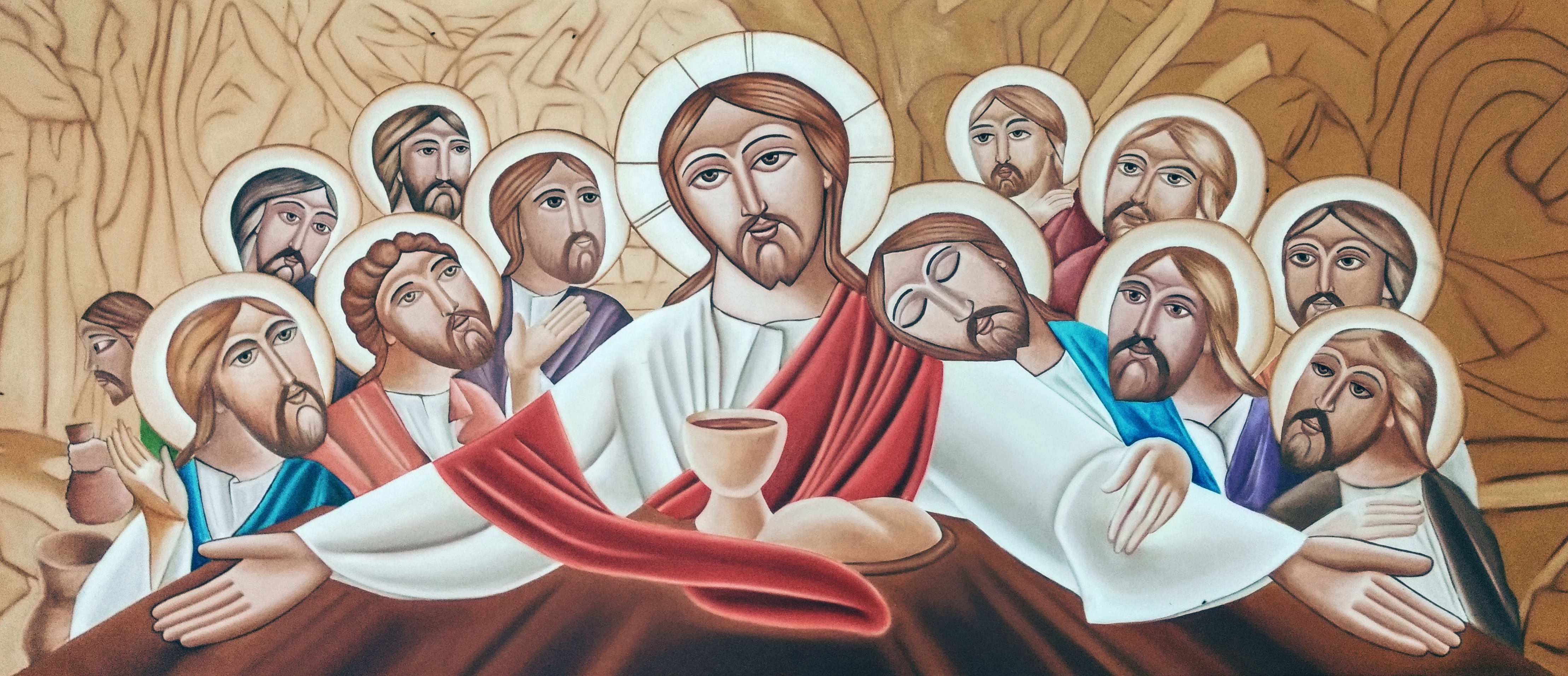
Jesus sent his twelve apostles. Twelve is more than a number to the Jewish people. It is a sacred number, the number of the sons of Jacob, the number of the tribes of the nation of Israel. Jesus chooses 12 of his followers to work closely with him. To do what? Jesus is making it clear that he is choosing 12 men to establish the new kingdom; he is symbolically expressing his intention to reconstitute Israel around Himself, announcing that the Jewish hopes for a renewed Israel were coming to fulfillment in the Kingdom he is proclaiming.
He calls them, and the Gospels give us their names, even when we hear no more about them or their background. They are real men with real lives and hopes, which they leave behind in order to participate in the mission of the Anointed One, for whom they have waited. Jesus calls them to himself, trains them, teaches them the ways of the Kingdom, allows them to experience the joy and peace of the Kingdom, and then he SENDS them out as ambassadors in his name, with his authority: “Jesus… gave them authority.”
In the preceding chapter of Matthew’s Gospel, we see Jesus doing exactly the things he is sending the apostles to do: preaching the Gospel of the Kingdom and healing people, noting that the people are like “sheep without a shepherd.” And now he sends the Twelve to those lost sheep to preach the Kingdom and “cure every disease and every illness”. He does not say that they have any power or authority of their own; he gives the authority to do these things. It’s interesting that Judas, who would later betray Jesus, and who was undoubtedly already known to be less than completely trustworthy, was also sent out; Jesus keeps giving opportunities to accept the Truth, repent, and be faithful to him!
The apostles are told to begin with the lost sheep of the house of Israel, who should have been prepared to receive the Gospel through their long history. But in many cases, they refused to receive it. Judas, who was one of the privileged few to walk closely with Jesus, refused it, choosing to rely on his own ideas and skills to manipulate the situation for himself. After Pentecost, the apostles finally understood that the Good News of the Kingdom is for the whole world, and were empowered to carry it to Samaritans and pagans. They did this in Christ’s name, with his authority, relying on his grace, not their own skills or resources. They knew from experience that they were weak and incapable on their own, but that the way of Christ, though often hard to grasp through understanding, always makes sense to the heart. In the end they sacrificed their very lives to share this Good News.
Jesús envió a sus doce apóstoles. Doce es más que un número para el pueblo judío. Es un número sagrado, el número de los hijos de Jacob, el número de las tribus de la nación de Israel. Jesús elige a doce de sus seguidores para trabajar de cerca con él. ¿y qué van a hacer? Jesús deja claro que está eligiendo a doce hombres para establecer el nuevo reino; está expresando simbólicamente su intención de reconstituir a Israel a su alrededor, anunciando que las esperanzas judías de un Israel renovado se realizan en el Reino que está proclamando.
Él los llama, y los Evangelios nos dan sus nombres, incluso cuando no sabemos más de ellos ni de su historia. Son hombres reales con vidas y esperanzas reales, que dejan todo para participar en la misión del Ungido, a quien han esperado. Jesús los llama a sí mismo, los forma, les enseña los caminos del Reino, les hace experimentar la alegría y la paz del Reino, y luego los ENVÍA como embajadores en su nombre, con su autoridad: “Jesús… les dio la autoridad.”
En el capítulo anterior del Evangelio de Mateo, vemos a Jesús haciendo exactamente las cosas que está enviando a los apóstoles a hacer: predicar el Evangelio del Reino y sanar a la gente, notando que son como “ovejas sin pastor”. Y ahora envía a los Doce a aquellas ovejas perdidas para predicar el Reino y “curar toda enfermedad y toda dolencia”. No dice que tengan ningún poder o autoridad propia; él da la autoridad para hacer estas cosas. Es interesante que Judas, quien luego traicionaría a Jesús, y quien sin duda ya era conocido por ser menos que completamente confiable, también fue enviado; ¡Jesús sigue dando oportunidades para aceptar la Verdad, arrepentirse y serle fiel!
Se les dice a los apóstoles que comiencen con las ovejas perdidas de la casa de Israel, quienes deberían haber sido preparadas para recibir el Evangelio a lo largo de su larga historia. Pero en muchos casos, se negaron a recibirlo. Judas, quien fue uno de los pocos privilegiados en caminar de cerca con Jesús, lo rechazó, eligiendo confiar en sus propias ideas y habilidades para manipular la situación a su favor. Después de Pentecostés, los apóstoles finalmente entendieron que la Buena Nueva del Reino es para todo el mundo, y fueron facultados para llevarla a los samaritanos y los paganos. Hicieron esto en el nombre de Cristo, con su autoridad, confiando en su gracia, no en sus propias habilidades o recursos. Sabían por experiencia que eran débiles e incapaces por sí mismos, pero que el camino de Cristo, aunque a menudo es difícil de comprender a través del entendimiento, siempre tiene sentido para el corazón. Al final, terminaron sacrificando sus propias vidas para compartir la Buena Nueva.
 Kathryn Mulderink, MA, is married to Robert, Station Manager for Holy Family Radio. Together they have seven children (including Father Rob), and seven grandchildren. She is President of the local community of Secular Discalced Carmelites and has published five books and many articles. Over the last 30 years, she has worked as a teacher, headmistress, catechist, Pastoral Associate, and DRE, and as a writer and voice talent for Catholic Radio. Currently, she serves the Church by writing and speaking, and by collaborating with various parishes and to lead others to encounter Christ and engage their faith. Her website is www.KathrynTherese.com
Feature Image Credit: Christian R. Rodríguez, cathopic.com/photo/2894-the-last-supper-jesus-and-his-apostles

 Kate Taliaferro is an Air Force wife and mother. She is blessed to be able to homeschool, bake bread and fold endless piles of laundry. When not planning a school day, writing a blog post or cooking pasta, Kate can be found curled up with a book or working with some kind of fiber craft. Kate blogs at
 Sr. Mary Martha Moss, FSP has had the grace of serving the Lord for over 40 years as a Daughter of St. Paul. Joyfully engaged in the community’s media ministry, she has authored 3 children’s books, presented on various topics for adult faith formation, enjoyed running Online Book Studies, served as a Pauline Book & Media Center manager and continues singing the alto part with the Daughters of St. Paul Concert Choir.
 Elizabeth Tomlin is the author of Joyful Momentum: Building and Sustaining Vibrant Women’s Groups and contributing author to the Ave Prayer Book for Catholic Mothers. She is General Counsel for the Archdiocese for the Military Services, USA. Elizabeth is an Army wife and mother of three and currently lives in the DC area. She blogs at
 Tami Urcia grew up in Western Michigan, a middle child in a large Catholic family. She spent early young adulthood as a missionary in Mexico, studying theology and philosophy, then worked and traveled extensively before finishing her Bachelor’s Degree in Western Kentucky. She loves tackling projects, finding fun ways to keep her little ones occupied, quiet conversation with the hubby and finding unique ways to love. She works full time, is a guest blogger on
 David Dashiell is a freelance author and editor in Nashville, Tennessee. He has a master’s degree in theology from Franciscan University, and is the editor of the anthology


 Merridith Frediani loves words and is delighted by good sentences. She also loves Lake Michigan, dahlias, the first sip of hot coffee in the morning, millennials, and playing Sheepshead with her husband and three kids. She writes for Catholic Mom, Diocesan.com, and her local Catholic Herald. Her first book Draw Close to Jesus: A Woman’s Guide to Adoration is available at Our Sunday Visitor and Amazon. You can learn more at
 Dr. Alexis Dallara-Marsh is a board-certified neurologist who practices in Bergen County, NJ. She is a wife to her best friend, Akeem, and a mother of two little ones on Earth and two others in heaven above.
 Sheryl is happy to be the number 1 cheerleader and supporter for her husband, Tom who is a candidate for the Permanent Diaconate in the Diocese of Kalamazoo. They are so grateful for the opportunity to grow together in this process. Sheryl’s day job is serving her community as the principal for St. Therese Catholic School in Wayland, Michigan. Since every time she thinks she gets life all figured out, she realizes just how far she has to go, St. Rita of Cascia is her go-to Saint for intercession and help. Home includes Carlyn, a very, very goofy Golden Retriever and Lucy, our not-so-little rescue puppy.



 1-800-994-9817