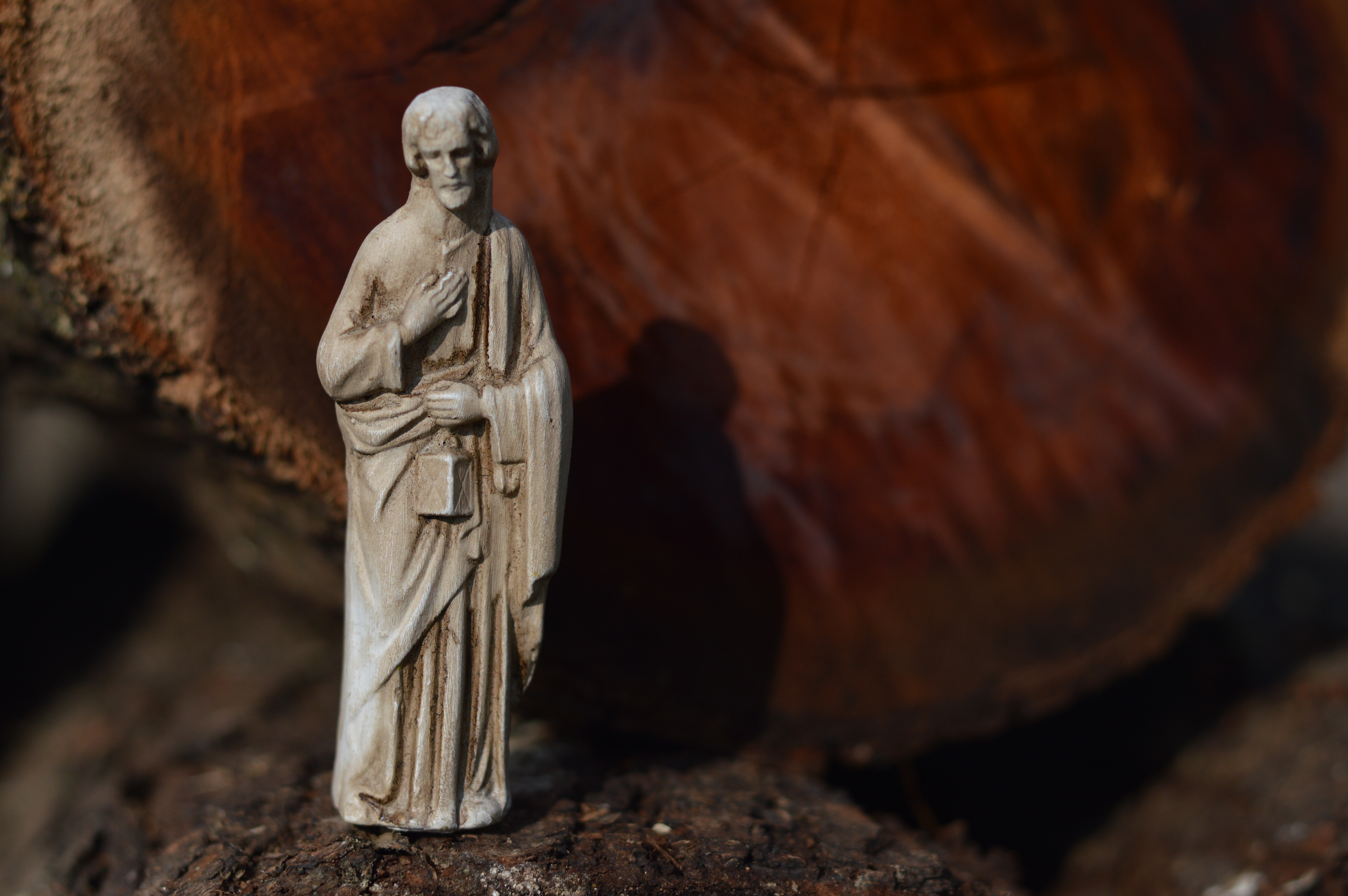
“See how the Lord blesses those who fear him” (Ps. 128:1). This is the antiphon of our Psalm, and we hear this sentiment expressed frequently throughout Scripture. The focus of our First Reading, Abraham, is a fine example of a man who fears the Lord, and the leper in the Gospel is another. Our First Reading emphasizes a key aspect of this fear: obedience.
Although Abraham has trouble understanding how God will give him another child, even laughing to himself, he believes God anyway and listens to him. From the beginning of his relationship with God, Abraham simply does what God asks of him, no matter how strange. He is told where to go and what to do, and the actions he is told to perform are often shocking. We may not realize it from our vantage point, but something like circumcision must have seemed excruciating to a person without a precedent for it and without anesthetics. Not to mention the later trial of the sacrifice of Isaac.
Nevertheless, Abraham maintains faith in the Lord and fear of the Lord, showing a filial reverence for Him by obeying His commands in a spirit of humble trust. This is echoed later in history by men like Job and Joseph. None of these men had perfect explanations from God (in fact, Job had no explanation until the end) as to why they were being told to do what they were, but all of them obeyed without losing faith, and without being disrespectful to the Lord.
This is a great lesson for us in the fear of the Lord. Fear of the Lord is an awe and respect for the Lord, but it is not an abstract concept. It is a very practical thing, lived out in faithful, humble obedience. God speaks directly in Scripture, and indirectly through various means in the Church, and it is sometimes difficult to trust in His authority and goodness. Many struggle with certain teachings of the Church but She is guided by the Holy Spirit, to whom we should show the same fear and obedience as Abraham, Job, and Joseph did.
God speaks not only through the moral teaching of the Church, but also through the sacramental life. He calls each of us to share in His own abundant life through participation in the sacraments, even when it is inconvenient and even when we do not fully understand why we need to. Ultimately, it is for our benefit that God asks us to attend Mass weekly, attend Confession once a year, and frequent the other sacraments, but it can be hard to see that sometimes amidst other concerns.
But our readings today emphasize the importance of such things, the importance of following the Lord even when what He asks of us is not fully grasped. This should urge us to follow the Lord with fervor ourselves, to receive the blessing of the fear of the Lord, and to invite others into the Church.
“Dichosos los que temen al Señor y siguen sus caminos.” (Sal. 128:1). Esta es la antífona de nuestro Salmo, y escuchamos este sentimiento expresado con frecuencia a lo largo de las Escrituras. El enfoque de nuestra Primera Lectura, Abraham, es un buen ejemplo de un hombre que teme al Señor, y el leproso en el Evangelio es otro. Nuestra Primera Lectura enfatiza un aspecto clave de este temor: la obediencia.
Aunque Abraham tiene problemas para entender cómo Dios le dará otro hijo, incluso riéndose de sí mismo, le cree a Dios de todos modos y lo escucha. Desde el comienzo de su relación con Dios, Abraham simplemente hace lo que Dios le pide, por extraño que sea. Se le dice adónde ir y qué hacer, y las acciones que se le piden que realice a menudo son impactantes. Puede que no nos demos cuenta desde nuestro punto de vista, pero algo como la circuncisión debe haber parecido insoportable para una persona sin precedentes y sin anestesia. Y ni hablar del juicio posterior del sacrificio de Isaac.
No obstante, Abraham mantiene la fe en el Señor y el temor del Señor, mostrando una reverencia filial hacia Él al obedecer Sus mandamientos con un espíritu de humilde confianza. Esto se repite más adelante en la historia por hombres como Job y José. Ninguno de estos hombres tuvo explicaciones perfectas de parte de Dios (de hecho, Job no tuvo ninguna explicación hasta el final) de por qué se les decía que hicieran lo que debían hacer, pero todos obedecieron sin perder la fe y sin faltarle el respeto al Señor.
Esta es una gran lección para nosotros en el temor del Señor. El temor del Señor es asombro y respeto por el Señor, pero no es un concepto abstracto. Es algo muy práctico, vivido en obediencia fiel y humilde. Dios habla directamente en las Escrituras, e indirectamente a través de varios medios en la Iglesia, y a veces es difícil confiar en Su autoridad y bondad. Muchos luchan con ciertas enseñanzas de la Iglesia pero Ella es guiada por el Espíritu Santo, a quien debemos mostrar el mismo temor y obediencia como lo hicieron Abraham, Job y José.
Dios habla no sólo a través de la enseñanza moral de la Iglesia, sino también a través de la vida sacramental. Él nos llama a cada uno de nosotros a compartir Su propia vida abundante a través de la participación en los sacramentos, aun cuando sea inconveniente e incluso cuando no entendamos completamente por qué necesitamos hacerlo. En última instancia, es para nuestro beneficio que Dios nos pida que asistamos a Misa semanalmente, nos confesemos una vez al año y frecuentamos los otros sacramentos, pero a veces puede ser difícil ver eso en medio de otras preocupaciones.
Pero nuestras lecturas de hoy enfatizan la importancia de tales cosas, la importancia de seguir al Señor incluso cuando no se capta completamente lo que Él nos pide. Esto debería impulsarnos a seguir al Señor con fervor, a recibir la bendición del temor del Señor y a invitar a otros a la Iglesia.
 David Dashiell is a freelance author and editor in Nashville, Tennessee. He has a master’s degree in theology from Franciscan University, and is the editor of the anthology Ever Ancient, Ever New: Why Younger Generations Are Embracing Traditional Catholicism.
Feature Image Credit: Hna Carolina BR, cathopic.com/photo/15080-saint-joseph-meek-and-humble-of-heart

 Leslie Sholly is a Catholic, Southern wife and mother of five, living in her hometown, Knoxville, Tennessee. She graduated from Georgetown University with an English major and Theology minor. She blogs at
 Deacon Dan Schneider is a retired general manager of industrial distributors. He and his wife Vicki have been married for over 50 years. They are the parents of eight children and thirty grandchildren. He has a degree in Family Life Education from Spring Arbor University. He was ordained a Permanent Deacon in 2002. He has a passion for working with engaged and married couples and his main ministry has been preparing couples for marriage.
 Dakota lives in Denver, CO with her husband, Ralph, and their two sons, Alfie & Theophilus. She is the Dean of Enrollment Management for Bishop Machebeuf High School where her husband also teaches. You can find Dakota at the zoo or a brewery with her family or with her nose in a book at home. For more of Dakota’s writing check out


 Allison Gingras (
 Kathryn Mulderink, MA, is married to Robert, Station Manager for Holy Family Radio. Together they have seven children (including Father Rob), and seven grandchildren. She is President of the local community of Secular Discalced Carmelites and has published five books and many articles. Over the last 30 years, she has worked as a teacher, headmistress, catechist, Pastoral Associate, and DRE, and as a writer and voice talent for Catholic Radio. Currently, she serves the Church by writing and speaking, and by collaborating with various parishes and to lead others to encounter Christ and engage their faith. Her website is
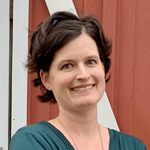 Kate Taliaferro is an Air Force wife and mother. She is blessed to be able to homeschool, bake bread and fold endless piles of laundry. When not planning a school day, writing a blog post or cooking pasta, Kate can be found curled up with a book or working with some kind of fiber craft. Kate blogs at
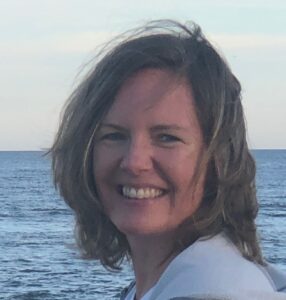 A lover of Jesus Christ, a wife, and a mother of five, Christine is the author of Everyday Heroism: 28 Daily Reflections on the Little Way of Motherhood. She is a graduate of Franciscan University, an instructor for the Institute for Excellence in Writing, and an experienced catechist. Thrilled to have recently become grandparents, she and her husband currently live in Upstate, NY. Visit her author webpage at
  1-800-994-9817