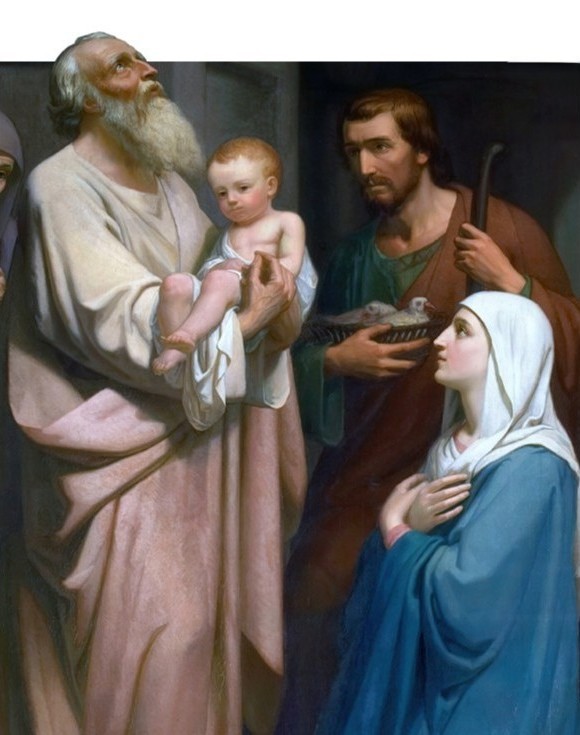
The Canticle of Simeon is a prayer of thanksgiving for hope fulfilled. He had been waiting for the Messiah and knew from the Holy Spirit that he “should not see death before he had seen the Christ of the Lord.” The Catechism of the Catholic Church defines hope as “the theological virtue by which we desire the kingdom of heaven and eternal life as our happiness, placing our trust in Christ’s promises and relying not on our own strength, but on the help of the grace of the Holy Spirit” (CCC 1817).
Simeon waited in hope and was rewarded. I find it interesting that he was satisfied to see the baby Jesus, the infant Messiah. Why was it enough to see the baby and not the full promise made to Israel?
It reminded me of a former classmate whose daughter was getting married. Two weeks before the wedding, they were at dinner, and the song chosen for their Father-Daughter dance began to play. He suggested they practice, and they did. During the dance, he told her he could die right then because everything was perfect. She was marrying a good man, and he had done his job as a father. He died unexpectedly a week later, before the wedding, and that dance was their last one. He had hope for the future by glimpsing the beginning of his daughter’s new life. There is beauty in the sadness of that story.
Simeon, like my classmate, didn’t need to see everything through to the end. The Messiah had arrived. Israel would be saved. God fulfilled His promises. How would it happen? He had no idea. When would salvation come? It came already in the small child in Simeon’s arms, even if the Jews were still oppressed.
I am like Simeon in some ways. I believe in the promises of God that fill the words of Scripture. I know his passion, death, and resurrection opened the gates of heaven for those who love the Lord – not just the Jews, but Gentiles as well. I know Jesus will come again. I can feel the joy of God’s promises when I read them, just as Simeon felt joy when holding the infant Jesus.
In other ways, I am very different from Simeon. I want to know the how and the when. The how and when of 2000 years ago is clear, but when will Jesus return? What about those I love who don’t have faith? What am I supposed to do with them? What is my plan of action, because surely I’m supposed to do something. I think that it’s my strength, not God’s, that will make the difference. Can I die before I know with certainty that they are saved? My need to know and control the outcome reveals my lack of hope.
My prayer today is for greater hope, for trust in God’s plan without knowing the details, for joy in the waiting.
St. Simeon, pray for us.
El Cántico de Simeón es una oración de acción de gracias por la esperanza cumplida. Había estado esperando al Mesías y sabía por el Espíritu Santo “que no moriría sin haber visto antes al Mesías del Señor”. El Catecismo de la Iglesia Católica define la esperanza como “la virtud teologal por la que aspiramos al Reino de los cielos y a la vida eterna como felicidad nuestra, poniendo nuestra confianza en las promesas de Cristo y apoyándonos no en nuestras fuerzas, sino en los auxilios de la gracia del Espíritu Santo” (CIC 1817).
Simeón esperó con esperanza y fue recompensado. Me parece interesante que se sintiera satisfecho de ver al niño Jesús, el Mesías como bebé. ¿Por qué le bastó ver al niño y no la promesa completa hecha a Israel?
Me recordó a un compañero de clases anterior cuya hija se casaba. Dos semanas antes de la boda, estaban cenando, y comenzó a sonar la canción elegida para su baile de padre e hija. Él sugirió que practicaran, y así lo hicieron. Durante el baile, le dijo que podía morir en ese mismo instante porque todo estaba perfecto. Ella se iba a casar con un buen hombre, y él había cumplido con su deber como padre. Murió inesperadamente una semana después, antes de la boda, y ese baile fue el último. Tenía esperanza en el futuro al vislumbrar el comienzo de la nueva vida de su hija. Hay belleza en la tristeza de esa historia.
Simeón, como mi compañero de clases, no necesitaba verlo todo hasta el final. El Mesías había llegado. Israel estaría a salvo. Dios cumpliría sus promesas. ¿Cómo sucedería? No tenía ni idea. ¿Cuándo llegaría la salvación? Llegó ya en el niño pequeño en brazos de Simeón, incluso si los judíos seguían oprimidos.
En algunos aspectos, soy como Simeón. Creo en las promesas de Dios que llenan las palabras de las Escrituras. Sé que su pasión, muerte y resurrección abrieron las puertas del cielo para quienes aman al Señor, no solo para los judíos, sino también para los gentiles. Sé que Jesús volverá. Puedo sentir la alegría de las promesas de Dios cuando las leo, así como Simeón sintió alegría al sostener al niño Jesús.
En otros aspectos, soy muy diferente de Simeón. Quiero saber el cómo y el cuándo. El cómo y el cuándo de hace 2000 años es claro, pero ¿cuándo regresará Jesús? ¿Qué pasa con los que amo que no tienen fe? ¿Qué se supone que debo hacer con ellos? ¿Cuál es mi plan de acción? Porque sin duda debo hacer algo. Pienso que es mi fuerza, no la de Dios, la que marcará la diferencia. ¿Puedo morir antes de saber con certeza que están salvos? Mi necesidad de saber y controlar el resultado revela mi falta de esperanza.
Mi oración hoy es por una mayor esperanza, por la confianza en el plan de Dios sin saber los detalles, por la alegría en la espera.
San Simeón, ruega por nosotros.

Colleen Orchanian is a podcaster, blogger, and spiritual director who desires to help others have a more profound encounter with God. She is the author of three books: Nearer My God to Thee, Times of Grace, and Lingering with God. Her podcast is Food for Thought (Spiritually Speaking). You can learn more at ColleenOrchanian.com.
Feature Image Credit: Diocesan stock photo, art.diocesan.com/stock-photo/for-my-eyes-have-seen-your-salvation-framed–cover-22358/
The views and opinions expressed in the Inspiration Daily blog are solely those of the original authors and contributors. These views and opinions do not necessarily represent those of Diocesan, the Diocesan staff, or other contributors to this blog.
 1-800-994-9817