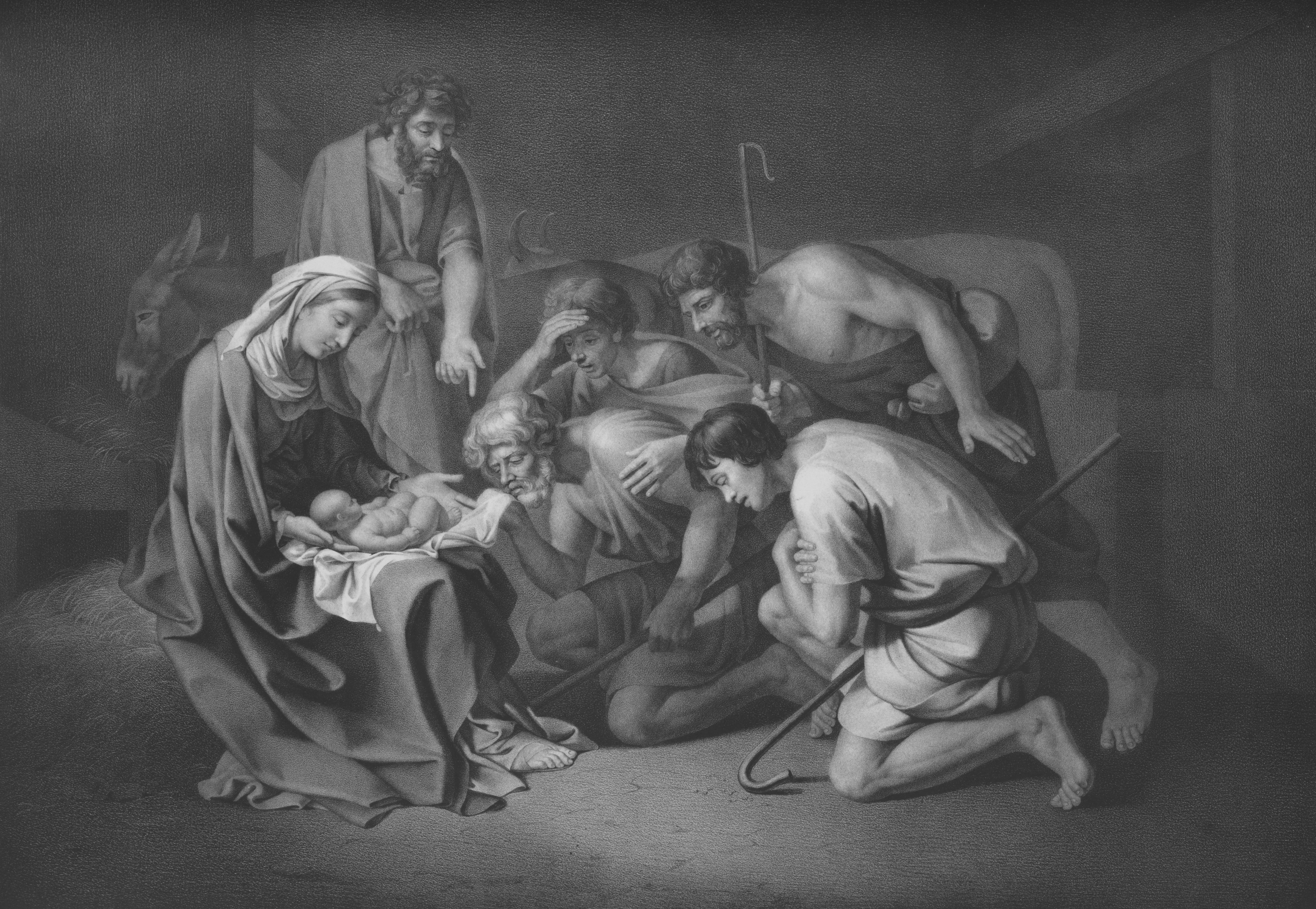
Many of you are likely very familiar with the Canticle of Zechariah. His words carry great meaning and recount the history of salvation, though it doesn’t often come to mind for me on Christmas Eve since we tend to focus on the Holy Family and the miracle of Jesus. Still, many priests have reflected on these words, the song, and the praise of this Canticle during their daily Liturgy of Hours. We are fortunate to still have the Canticle of Zechariah within reach. Zechariah proclaimed this on the day his son, John the Baptist, was circumcised. I can’t help but think: if I had been mute for nine months and just regained my speech, how loudly would I praise?
On October 1, 2003, Saint John Paul II gave a general audience address about the Canticle of Zachariah. He introduced the teachings of Bede the Venerable, one of the Doctors of the Church, who also commented on the Canticle of Zechariah in one of his homilies: “The Lord… has visited us as a doctor visits the sick, because to heal the deep-rooted sickness of our pride, he gave us the new example of his humility; he redeemed his people, for at the price of his blood he set us free when we had become servants of sin and slaves of the ancient enemy…. Christ found us lying “in darkness and in the shadow of death’, that is, oppressed by the long-lasting blindness of sin and ignorance…. He brought to us the true light of his knowledge, and banishing the darkness of error, he has shown us the sure way to the heavenly homeland. He has directed the steps of our actions to make us walk on the path of truth, which he has pointed out to us, and to enable us to enter the home of eternal peace, which he has promised us”.
That essentially summarizes how the Canticle of Zachariah works. There is a lot of pride in the world right now. Each of us falls short in humility as we strive each day to walk like Jesus. But centuries ago, people were discussing the same issue. Pride keeps us from doing what the Lord asks. We are saved by the birth, death, and resurrection of our Lord, Jesus Christ, so why do we choose to turn back to darkness when he offers us, every day, new light in Him?
So, on this Christmas Eve, I invite you to get down on your knees in humility and with your whole heart, soul, mind, and body to praise and thank God for this beautiful gift of salvation, his son Jesus Christ. May we be inspired by the breath of the Holy Spirit as Zechariah was and proclaim, “Blessed be the Lord, the God of Israel.”
Muchos de ustedes probablemente conocen muy bien el Cántico de Zacarías. Sus palabras tienen un gran significado y narran la historia de la salvación, aunque no suelo pensar en él en la Nochebuena, ya que solemos centrarnos en la Sagrada Familia y el milagro de Jesús. Aun así, muchos sacerdotes han reflexionado sobre estas palabras, el canto y la alabanza de este Cántico, a diario durante la Liturgia de las Horas. Tenemos la suerte de tener aún a mano el Cántico de Zacarías. Zacarías lo proclamó el día en que circuncidaron a su hijo, Juan el Bautista. No puedo evitar pensar: si hubiera estado muda durante nueve meses y acabara de recuperar el habla, ¿con qué fuerza alabaría a Dios?
El 1 de octubre de 2003, san Juan Pablo II pronunció un discurso en la audiencia general sobre el Cántico de Zacarías. Introdujo las enseñanzas de Beda el Venerable, uno de los Doctores de la Iglesia, quien también comentó sobre el Cántico de Zacarías en una de sus homilías: “El Señor (…) nos ha visitado como un médico a los enfermos, porque para sanar la arraigada enfermedad de nuestra soberbia, nos ha dado el nuevo ejemplo de su humildad; ha redimido a su pueblo, porque nos ha liberado al precio de su sangre a nosotros, que nos habíamos convertido en siervos del pecado y en esclavos del antiguo enemigo. (…) Cristo nos ha encontrado mientras yacíamos “en tinieblas y sombras de muerte”, es decir, oprimidos por la larga ceguera del pecado y de la ignorancia. (…) Nos ha traído la verdadera luz de su conocimiento y, habiendo disipado las tinieblas del error, nos ha mostrado el camino seguro hacia la patria celestial. Ha dirigido los pasos de nuestras obras para hacernos caminar por la senda de la verdad, que nos ha mostrado, y para hacernos entrar en la morada de la paz eterna, que nos ha prometido”.
Esto resume en esencia el Cántico de Zacarías. Hay mucho orgullo en el mundo hoy en día. Cada uno de nosotros carece de humildad al esforzarnos cada día por caminar como Jesús. Pero hace siglos, se discutía el mismo tema. El orgullo nos impide hacer lo que el Señor nos pide. Hemos sido salvados por el nacimiento, la muerte y la resurrección de nuestro Señor Jesucristo, así que ¿por qué elegimos volver a la oscuridad cuando él nos ofrece, cada día, nueva luz en Él?
Así que, en esta Nochebuena, los invito a arrodillarse con humildad, con todo su corazón, alma, mente y cuerpo, para alabar y agradecer a Dios por este hermoso don de la salvación, su hijo Jesucristo. Que nos inspire el aliento del Espíritu Santo, como Zacarías, y proclamemos: “Bendito sea el Señor, Dios de Israel”!

Marti Garcia’s passions are her retired life and growing deeper in her Catholic faith. Marti is a Sacristan/EM, facilitates small groups, and assists as a First Communion Catechist for parents. Being a parent educator and writer for 35 years, she recently published a children’s chapter book on Amazon, The Ladybugs. You can find her at her blog: MartiGarcia.org, or thewaterisshallow.com, or her cohost podcast, findingacommonthread.com, which is coming soon.
Feature Image Credit: The New York Public Library, https://unsplash.com/photos/FNEf5rqsz8g
The views and opinions expressed in the Inspiration Daily blog are solely those of the original authors and contributors. These views and opinions do not necessarily represent those of Diocesan, the Diocesan staff, or other contributors to this blog.
 1-800-994-9817