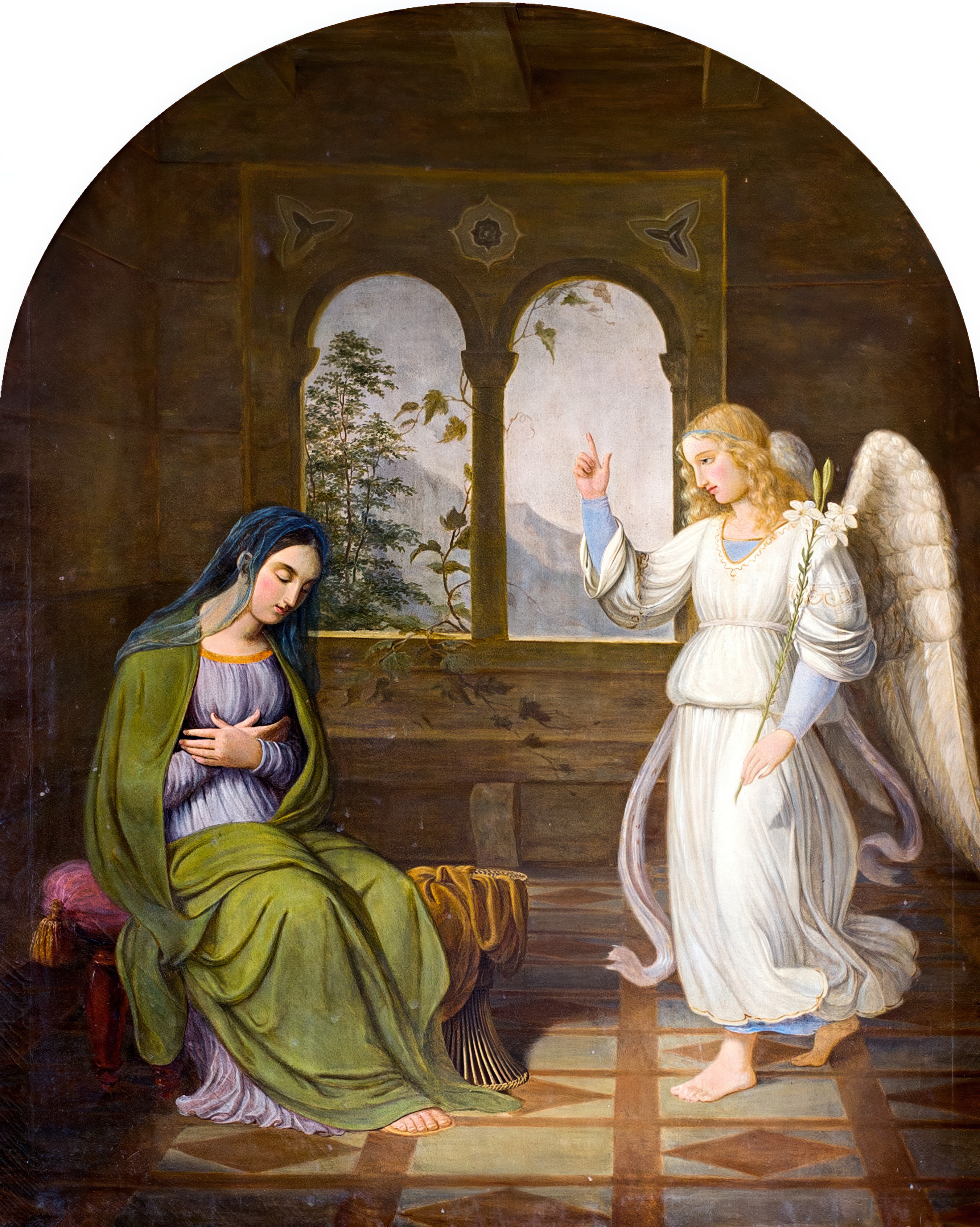
This passage, often referred to as the Annunciation, marks one of the most profound moments in the Christian narrative. The angel Gabriel’s words to Mary are rich with theological and spiritual significance, revealing God’s intimate involvement in human history and the extraordinary role that Mary is called to play in the unfolding of salvation.
“Hail, full of grace! The Lord is with you.” These opening words are striking. The angel does not begin with a command or even an introduction, but with a greeting that acknowledges Mary’s unique spiritual state: “full of grace.” This phrase suggests not only Mary’s inner purity and righteousness but also her openness to God’s will. It is important to note that grace, by nature, is a gift—it is unearned. That Mary is “full” of grace implies that she is completely receptive to God’s presence and action in her life.
Yet, her response shows humility and humanity: “she was greatly troubled… and pondered what sort of greeting this might be.” Mary’s reaction shows that holiness does not remove fear or uncertainty. Her pondering is not doubt, but a deep inner reflection, revealing her thoughtful nature and spiritual depth.
The angel’s next words aim to calm her heart: “Do not be afraid, Mary, for you have found favor with God.” This reassurance echoes throughout Scripture whenever God calls someone to a great task. Fear is natural when confronted with the divine, but God always offers peace to those He calls. Mary’s favor with God is not based on status or achievement, but on her willingness to say yes.
Then comes the incredible message: Mary will conceive and bear a son named Jesus. This foreshadows His mission of redemption. The angel continues, saying He “will be great and will be called Son of the Most High.” This is no ordinary child. The divine identity of Jesus is made clear from the beginning, and His kingship is established: “The Lord God will give Him the throne of David… and of His Kingdom there will be no end.”
This moment highlights the intersection of heaven and earth. A young woman in a quiet town is entrusted with the most important mission in history – not through power or prestige, but through humility and trust. Mary is invited into a divine plan, and her freedom to respond is honored.
In reflecting on this scene, we are reminded that God often speaks in quiet but life-altering ways. Like Mary, we may feel fear or confusion, but we are also called to listen, to ponder, and ultimately, to trust. The Annunciation invites us to open our hearts to God’s call – however unexpected – and to believe that through our willingness, His grace can do great things.
From all of us here at Diocesan, God bless!
Este pasaje, a menudo conocido como la Anunciación, marca uno de los momentos más profundos de la narrativa cristiana. Las palabras del ángel Gabriel a María son ricas en significado teológico y espiritual, revelando la íntima participación de Dios en la historia humana y el extraordinario papel que María está llamada a desempeñar en el desarrollo de la salvación.
“Alégrate, llena de gracia, el Señor está contigo”. Estas palabras iniciales son impactantes. El ángel no comienza con una orden ni siquiera con una introducción, sino con un saludo que reconoce el estado espiritual único de María: “llena de gracia”. Esta frase sugiere no sólo la pureza y rectitud interior de María, sino también su apertura a la voluntad de Dios. Es importante señalar que la gracia, por naturaleza, es un don; no se gana. Que María esté “llena” de gracia implica que es completamente receptiva a la presencia y acción de Dios en su vida.
Sin embargo, su respuesta muestra humildad y humanidad: “se preocupó mucho y se preguntaba qué querría decir semejante saludo”. La reacción de María demuestra que la santidad no elimina el miedo ni la incertidumbre. Su reacción no es duda, sino una profunda reflexión interior, que revela su naturaleza reflexiva y su profundidad espiritual.
Las siguientes palabras del ángel buscan tranquilizar su corazón: “No temas, María, porque has hallado gracia ante Dios”. Esta confirmación está reiterada en toda la Escritura cada vez que Dios llama a alguien a una gran tarea. El miedo es natural ante lo divino, pero Dios siempre ofrece paz a quienes llama. El favor de María ante Dios no se basa en el estatus ni en los logros, sino en su disposición a decir que sí.
Entonces llega el increíble mensaje: María concebirá y dará a luz un hijo llamado Jesús. Esto presagia su misión redentora. El ángel continúa diciendo que “será grande y será llamado Hijo del Altísimo”. Este no es un niño cualquiera. La identidad divina de Jesús queda clara desde el principio, y su reinado queda establecido: “El Señor Dios le dará el trono de David… y su reinado no tendrá fin”.
Este momento resalta la intersección del cielo y la tierra. A una joven de un pueblo tranquilo se le confía la misión más importante de la historia, no por poder ni prestigio, sino por humildad y confianza. María es invitada a un plan divino y se honra su libertad para responder.
Al reflexionar sobre esta escena, recordamos que Dios a menudo habla de maneras silenciosas, pero transformadoras. Al igual que María, podemos sentir miedo o confusión, pero también estamos llamados a escuchar, a reflexionar y, en última instancia, a confiar. La Anunciación nos invita a abrir nuestros corazones al llamado de Dios, por inesperado que sea, y a creer que, mediante nuestra disposición, su gracia puede obrar grandes cosas.
De parte de todos nosotros, aquí en Diocesan, ¡Dios los bendiga!

Tommy Shultz is a Business Development Representative for Diocesan. In this role he is committed to bringing the best software to dioceses and parishes while helping them evangelize on the digital continent. Tommy has worked in various diocese and parish roles since his graduation from Franciscan University with a Theology degree. He hopes to use his skills in evangelization, marketing, and communications, to serve the Church and bring the Good News to all. His favorite quote comes from St. John Paul II, who said, “A person is an entity of a sort to which the only proper and adequate way to relate is love.”
Feature Image Credit: Unknown Artist, art.diocesan.com/stock-photo/the-annunciation-24351/
The views and opinions expressed in the Inspiration Daily blog are solely those of the original authors and contributors. These views and opinions do not necessarily represent those of Diocesan, the Diocesan staff, or other contributors to this blog.
 1-800-994-9817